Una denominación de origen no es un adorno de etiqueta. Es una promesa jurídica: el café nace en una geografía delimitada, bajo reglas de altitud y de uso, y la taza debe poder mostrar ese origen. En El Salvador esa promesa tiene seis nombres, publicados como distintivo de calidad por el Instituto Salvadoreño del Café (ISC): Café Apaneca Ilamatepec, Café Cacahuatique, Café Alotepec, Café Bálsamo Quezaltepec, Café Tecapa Chinameca y Café Chichontepec.
El titular del registro de una denominación de origen es siempre el Estado de El Salvador. Ninguna marca privada es dueña del nombre de la cordillera. Quien quiera usar el distintivo debe cumplir el reglamento de uso y administración. Por eso el ISC los pone a disposición: para que la regla sea pública y para que un tostador en Hamburgo o en Seúl pueda exigir un nombre que no se inventó en el último embarque.
Una actualización que enseña el mapa
El 5 de junio de 2026 el Instituto actualizó, entre otros, los reglamentos de Café Apaneca Ilamatepec y de Café Tecapa Chinameca. En el mismo portal, el reglamento de Café Bálsamo Quezaltepec figura con fecha 2 de septiembre de 2022. El gesto es administrativo y didáctico a la vez: una denominación vive si se mantiene vigente, no si queda en un cajón.
Tome Bálsamo-Quezaltepec como lección de mapa. La zona protegida es la cordillera del mismo nombre, a partir de los 800 metros sobre el nivel del mar. Cubre municipios de La Libertad —Santa Tecla, Colón, Huizucar, Antiguo Cuscatlán, Nuevo Cuscatlán, Sacacoyo, Tepecoyo, Jayaque, Talnique, Tamanique, Teotepeque, Comasagua, Quezaltepeque y San Juan Opico—, de San Salvador —San Salvador, Nejapa, Santiago Texacuangos, Santo Tomás y San Marcos— y de Sonsonate —San Julián y Santa Isabel Ishuatán—. Ochocientos metros no es un número redondo para el folleto: es el piso a partir del cual el reglamento considera que este paisaje puede dar un café con el carácter de la sierra. La brisa del Pacífico, el volcán de San Salvador (Quezaltepec) y las lomas del bálsamo explican por qué esta denominación arranca más abajo que otras.
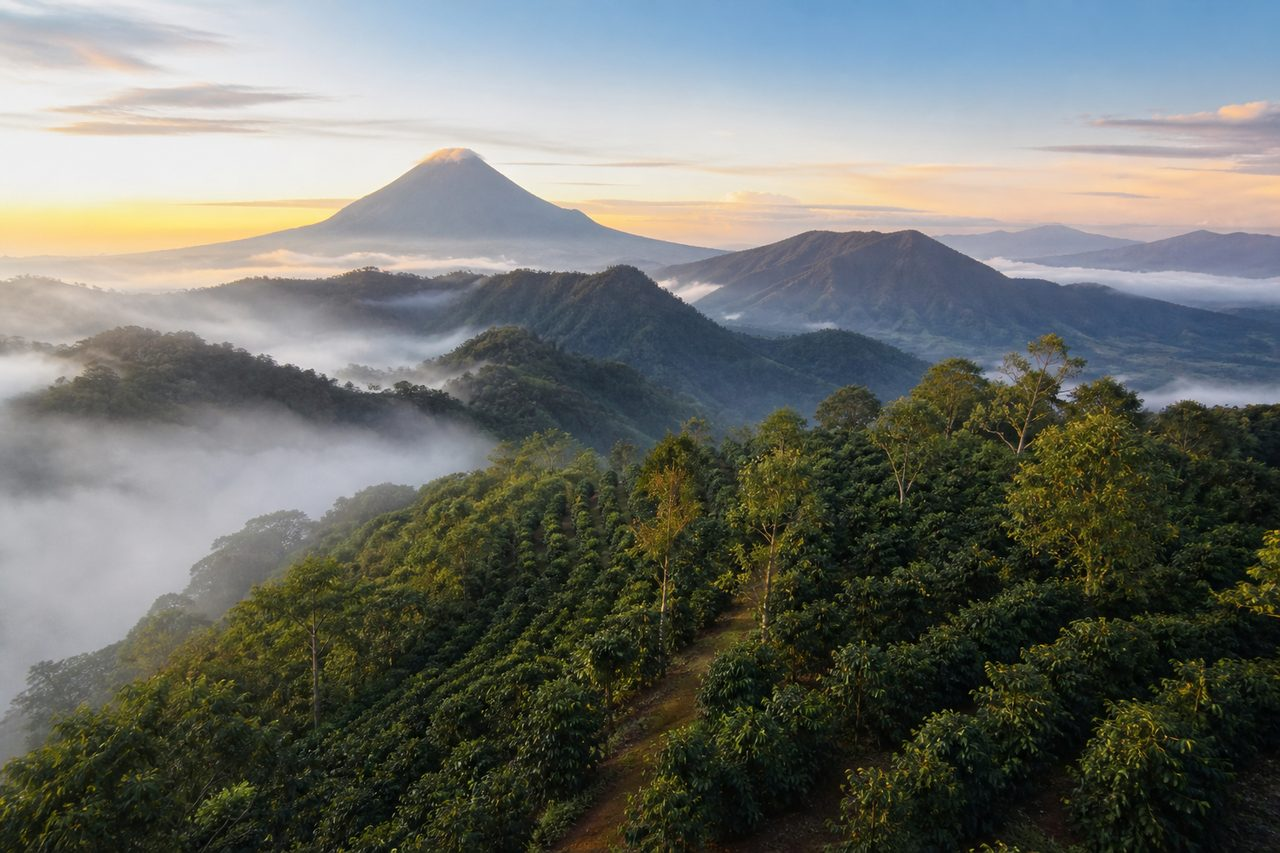
Apaneca Ilamatepec, en cambio, se delimita a partir de los 900 metros en la cordillera homónima, en Ahuachapán, Sonsonate y Santa Ana: Apaneca, Concepción de Ataco, Juayúa, Izalco, Santa Ana, Coatepeque y municipios vecinos. Niebla, noches frías, suelos de lava: esa es la postal más citada de la especialidad salvadoreña. Cacahuatique, Alotepec, Tecapa-Chinameca y Chichontepec cierran el arco volcánico de oriente a occidente. Cada nombre es una montaña o un par de volcanes.
Qué pide la taza y qué debe pedir el comprador
El café salvadoreño no compite por volumen. Compite porque la cereza madura despacio en altura, a la sombra, sobre material volcánico. Dulzor, acidez limpia, cuerpo sedoso: cualidades que el mercado de especialidad ya asocia a este origen. La denominación existe para que esa taza no se venda como «un arábica centroamericano», sino como un café con altitud, municipio y reglamento.
¿Qué debe buscar quien bebe? Un lote que declare la cordillera y que se deje catar: panela, cacao, cítrico o flor, según la finca y el proceso, pero siempre con limpieza. ¿Qué debe exigir quien compra? Que el distintivo coincida con la finca, no solo con el marketing. Descubrir Café de El Salvador incluye aprender estos seis nombres. Son la manera que tiene el país de decir que paisaje y taza son el mismo contrato.