El 4 de noviembre de 2024, la Specialty Coffee Association adoptó como estándares oficiales tres piezas del Coffee Value Assessment (CVA): preparación de muestra y mecánica de cata (SCA-102), evaluación descriptiva (SCA-103) y evaluación afectiva (SCA-104). El anuncio, recogido también por Daily Coffee News el 5 de noviembre, es explícito: esos componentes sustituyen el protocolo y la ficha de cata de 2004, el formulario que durante dos décadas condensó la especialidad en un solo puntaje sobre 100. A finales de 2024 el cambio ya no era piloto: era norma.
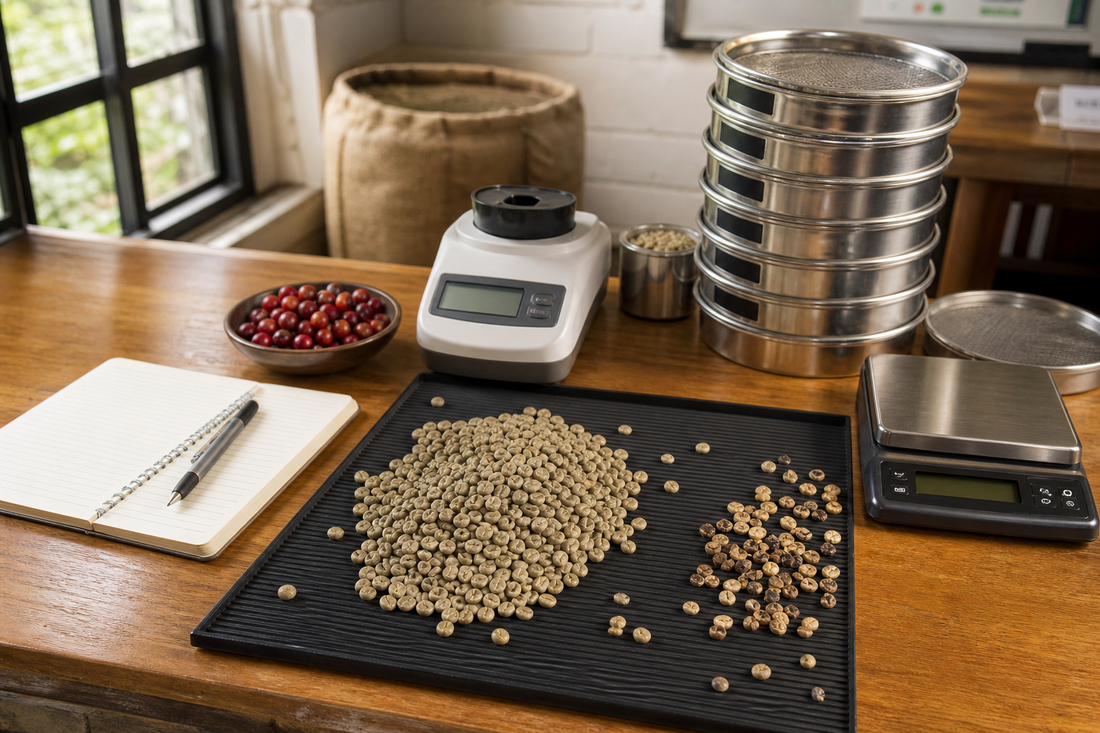
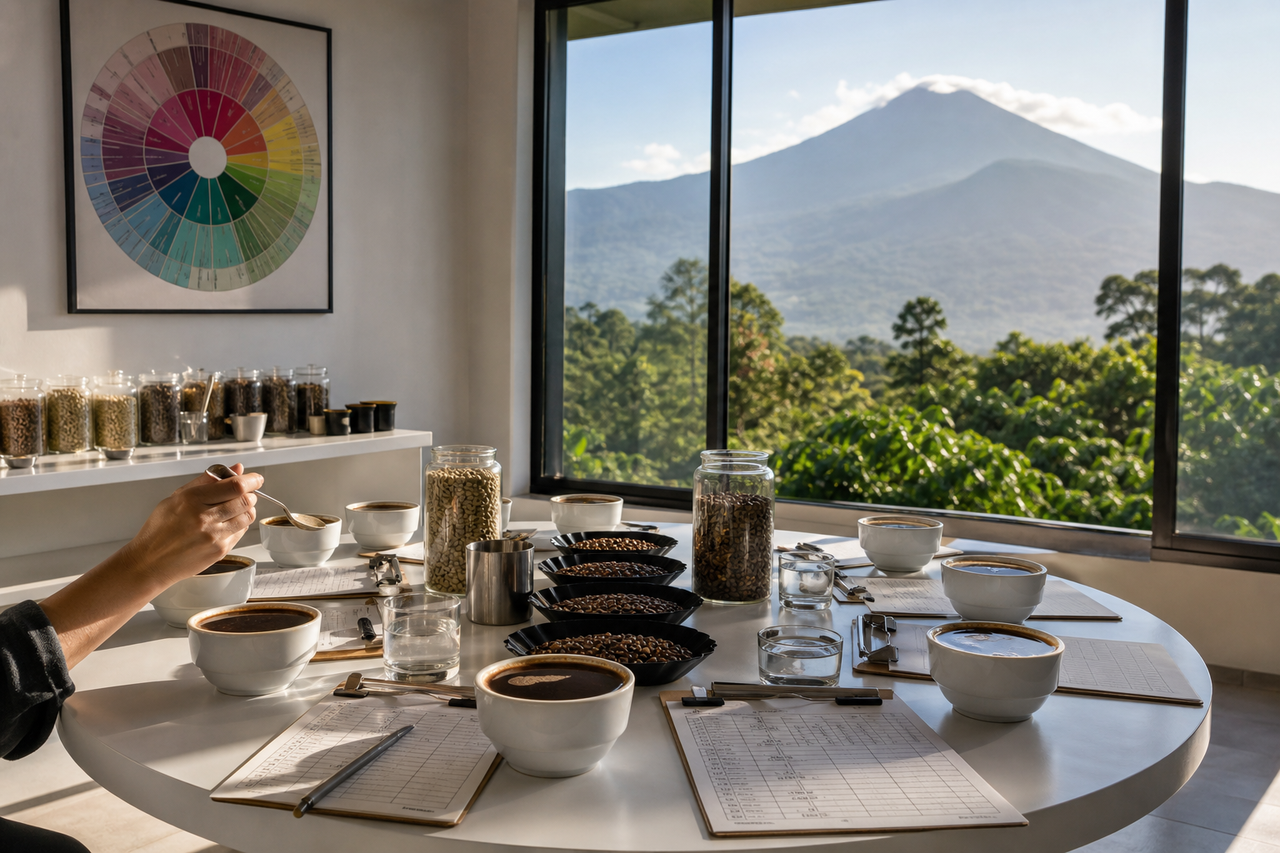
La ficha de 2004, publicada por la entonces SCAA, unió en una hoja descripción y gusto. El CVA, descrito en sca.coffee/value-assessment, abre la taza en cuatro lentes. El físico mira el grano verde: color, defectos, humedad, tamaño; se apoya en el sistema de clasificación de 2004 y entra en el examen práctico del curso Q. El descriptivo registra, con lenguaje estandarizado, aromas, sabores, textura y retrogusto, y sus intensidades, sin preguntar si el catador “ama” el café. El afectivo sí pregunta por la impresión de calidad —preferencia personal o de un mercado conocido—. El extrínseco (estándar SCA-105) valora lo que no está en la taza y sí en el saco: origen, trazabilidad, proceso, certificaciones, relato de finca.
Un idioma que el productor salvadoreño puede usar
Para El Salvador el giro no es cosmética de laboratorio. Un Pacamara de Chalatenango, un Bourbon de sombra en Apaneca o un Gesha de Metapán no se explican solo con un 87. El lente descriptivo permite decir *qué* hay en taza; el afectivo, *a quién* le encaja; el extrínseco, *por qué* el lote vale más allá del defecto y del puntaje: variedad, parcela, proceso honey o natural, denominación de origen del Instituto Salvadoreño del Café. Es un lenguaje compartido entre quien cultiva en ladera volcánica y quien compra en Tokio, Seúl o Hamburgo. El comprador deja de traducir un número; el productor deja de recibir un veredicto opaco.
Mario Fernández, responsable técnico de la SCA, habló de un punto de referencia mundial alineado con la ciencia sensorial moderna: datos de alta resolución, no un único dígito. Yannis Apostolopoulos, director ejecutivo, situó el CVA en la misión de una especialidad más equitativa para toda la cadena. Eso importa en un origen pequeño: la prima no nace solo del concurso; nace de poder nombrar atributos que el mercado ya paga.
En abril de 2025, Daily Coffee News documentó el siguiente capítulo: el CVA avanzaba en orígenes productores y el programa Q se reorientaba hacia el nuevo sistema. La SCA y el Coffee Quality Institute anunciaron que, desde el 1 de octubre de 2025, un Q “evolucionado” se construiría sobre el CVA, no sobre la ficha de 2004. Para catadores y laboratorios salvadoreños —incluidos los del ISC— la lección es práctica: conviene aprender las cuatro lentes ahora, no cuando el cliente ya las exija en el contrato. El CVA no borra la calidad de altura salvadoreña. Le da un vocabulario que cabe en la mesa de cata y en la ficha del lote.