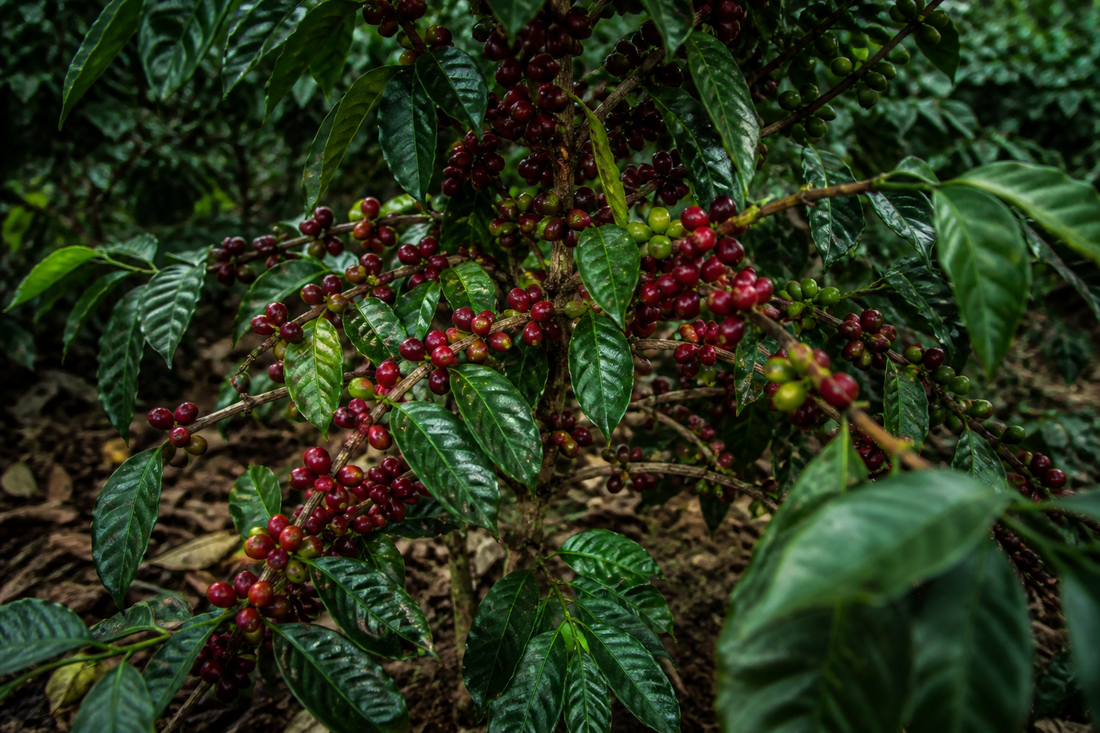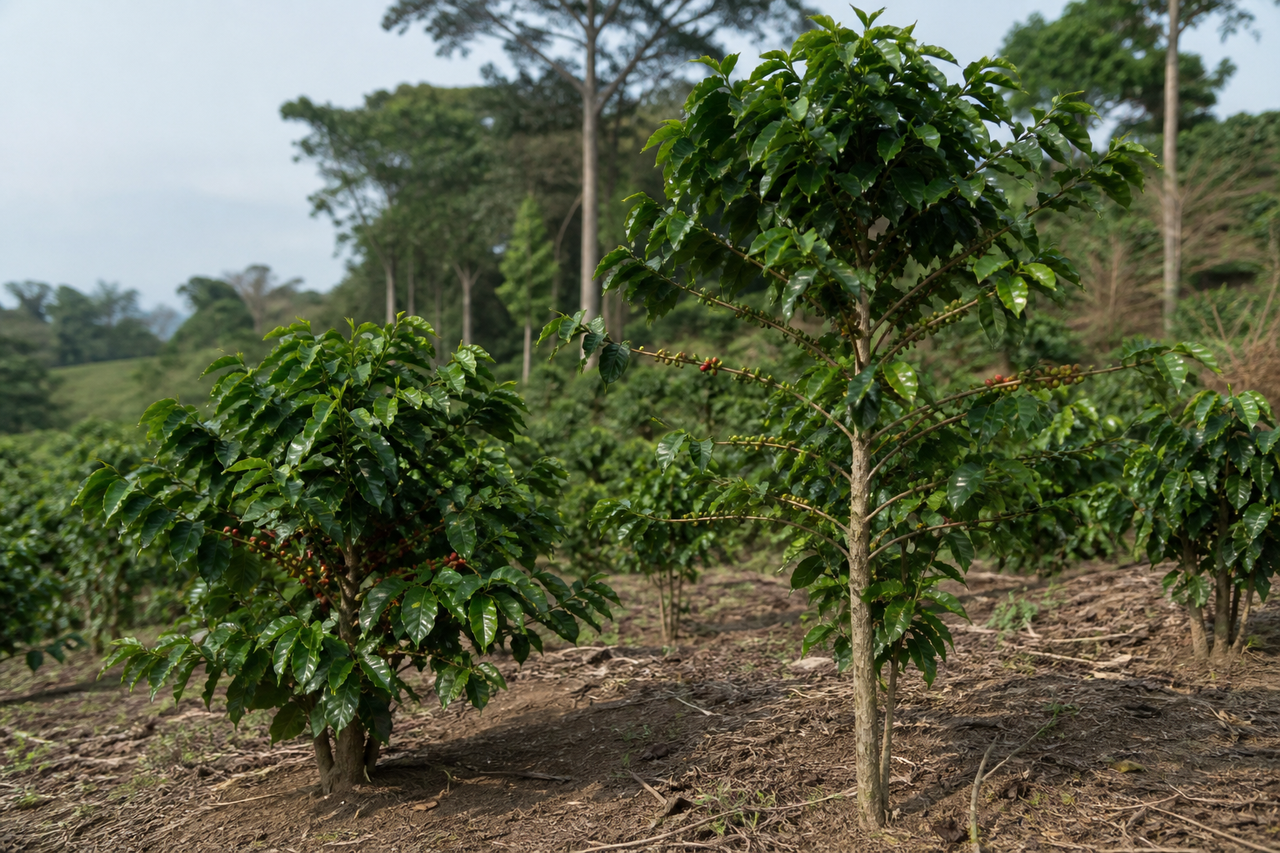
En 1949, en la finca San Rafael de Santa Ana, Fernando Alberto Pacas Figueroa observó algo distinto entre sus cafetos Bourbon: una planta más baja, de ramas compactas y cereza de calidad. No era un cruce de laboratorio ni una importación exótica. Era una mutación natural de Bourbon, el clásico que desde mediados del siglo XIX había definido el sabor salvadoreño. Esa planta se llamó Pacas, y con el tiempo se convirtió en una de las variedades más plantadas del país.
World Coffee Research la clasifica como mutación de un solo gen respecto de Bourbon: la planta es enana, lo que permite siembra más densa, manejo más cómodo en ladera y, en muchos casos, mejor rendimiento por hectárea sin sacrificar el perfil dulce que el mercado asocia al origen. Sucafina, al describir El Salvador para compradores internacionales, sitúa a Pacas entre los pilares varietales del país junto a Bourbon y Pacamara. Se estima que alrededor del 25 % de la producción nacional proviene de esta genética.
De San Rafael al vivero nacional
El hallazgo no quedó en un rincón de finca. En 1960, el entonces Instituto Salvadoreño de Investigaciones del Café (ISIC) seleccionó Pacas como variedad de interés agronómico: confirmó su origen genético, evaluó su comportamiento en altura y la difundió entre productores. Ese gesto explica por qué Pacas no es solo una anécdota familiar —aunque la dinastía Pacas sigue cultivándola— sino una infraestructura genética del café salvadoreño.
Para el tostador, Pacas se comporta como Bourbon en taza: dulzor de panela, chocolate, nuez y acidez moderada, con cuerpo redondo. La diferencia está en la finca: plantas más bajas facilitan cosecha selectiva y renovación ordenada. En Apaneca-Ilamatepec o en laderas de Santa Ana, Pacas madura con la lentitud propia de la altura volcánica; el resultado es limpieza y equilibrio, no espectáculo vacío.
La antesala del Pacamara
Sin Pacas no habría Pacamara. En la década de 1950, el ISIC cruzó Pacas con Maragogipe —el grano gigante de tamaño y personalidad— buscando combinar la compacidad de la mutación con el potencial sensorial del Maragogipe. Pacamara nació en El Salvador y se convirtió en la firma del origen en concursos como Taza de Excelencia. Si Bourbon es el cimiento y Pacamara la firma, Pacas es el puente genético entre ambos.
Quien arma una carta por origen debería entender esta genealogía. Un lote Pacas lavado de occidente enseña el dialecto clásico del país; un Pacamara honey de Chalatenango enseña la evolución. Pacas, en el medio, recuerda que la innovación salvadoreña no empezó con Gesha ni con procesos anaeróbicos: empezó con un caficultor que miró su parque, reconoció una mutación y la cuidó hasta convertirla en patrimonio.
Qué buscar en taza
Pacas no compite por rareza; compite por constancia. Busque trazabilidad de finca, altitud declarada y cereza madura. Espere un café de uso diario con personalidad: dulzor honesto, acidez cítrica suave, final limpio. En un origen que hoy explora variedades africanas y fermentaciones experimentales, Pacas sigue siendo la respuesta cuando el comprador pregunta qué hace único al café de El Salvador sin salir del mapa clásico. La mutación de 1949 sigue viva en más de una cuarta parte del parque cafetalero: es historia, ciencia y taza en la misma planta.