

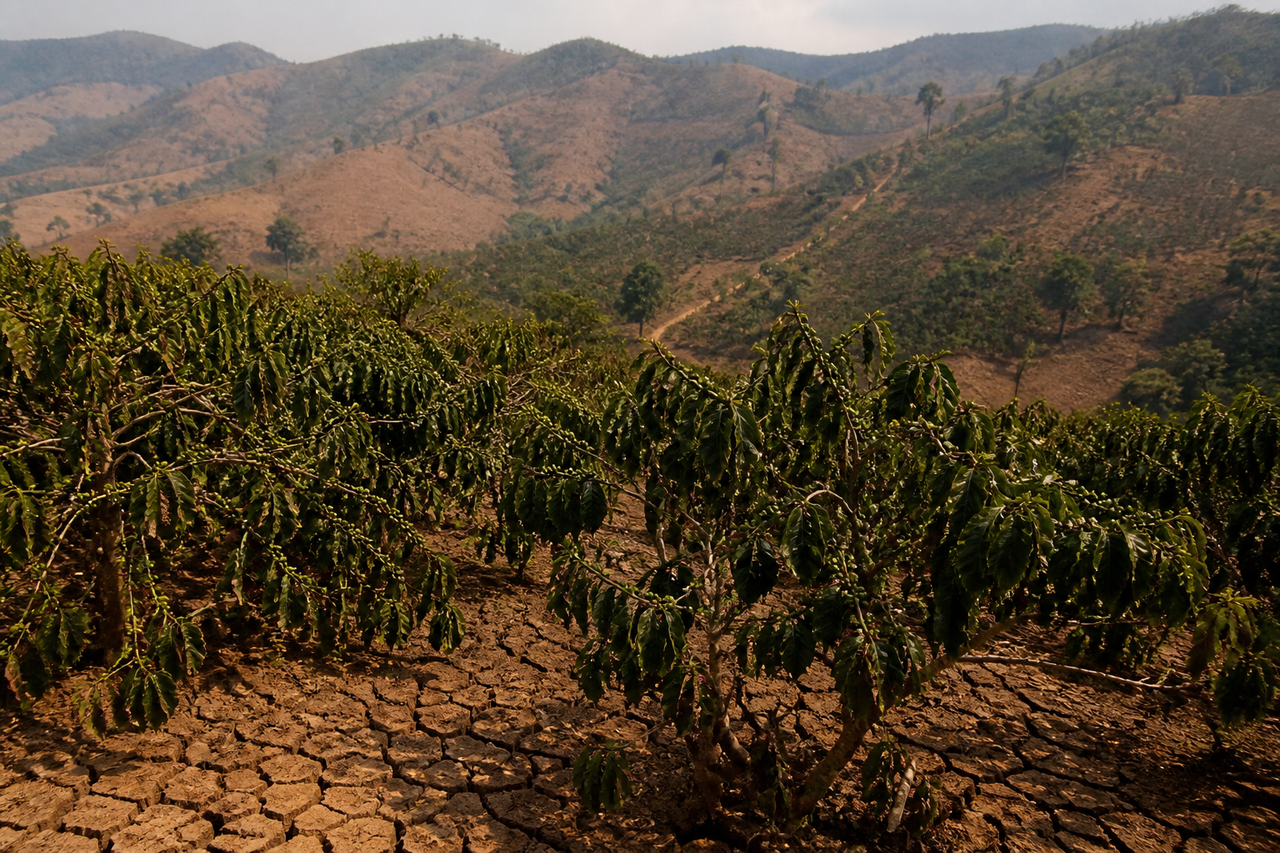
Vietnam is the world’s second-largest coffee producer and the anchor of Robusta: Agri-ProAfrica puts about 95% of its crop as *Coffea canephora*, concentrated in the Central Highlands. When that origin stumbles, the soluble market, the blend market and the London price notice the next day. The International Coffee Organization’s Coffee Market Reports put it in writing through 2025.
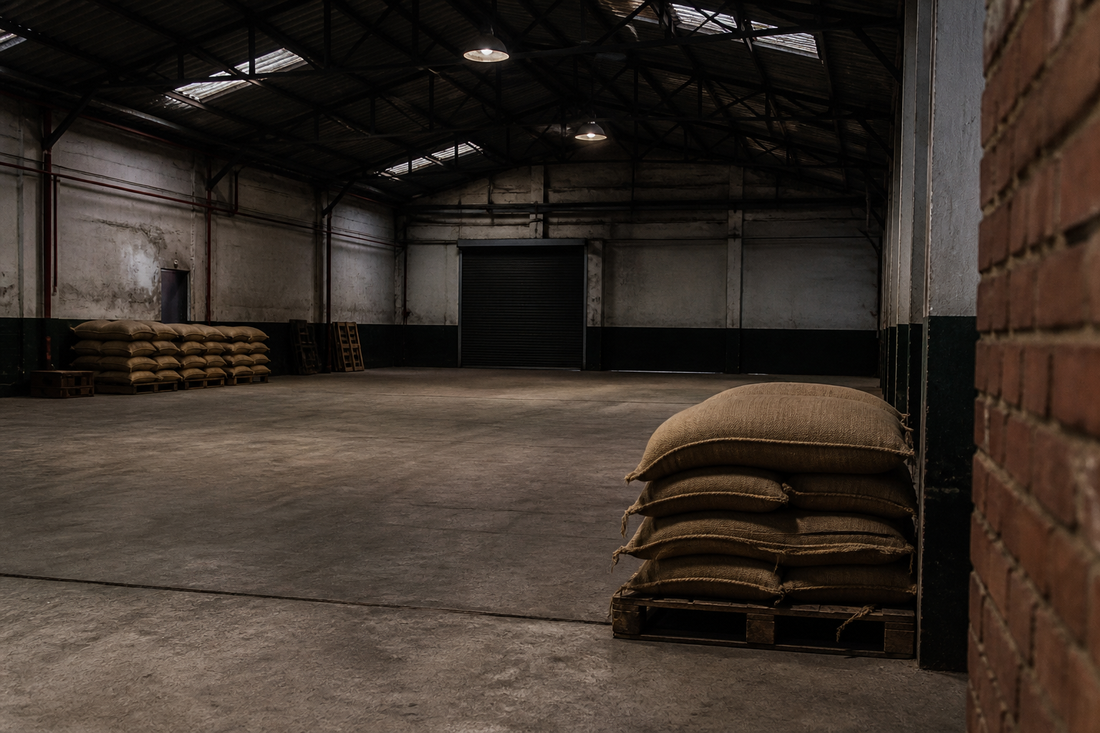
The 2023/24 harvest was poor. The September report (cmr-0925) puts Vietnamese exports that coffee year at 25.09 million bags, against 27.8 million the previous cycle, with production down to 26.79 million on adverse weather. The December report (cmr-1225) adds the detail that matters most to buyers: domestic supply hit record lows and local stocks were almost completely depleted. The gap was not fully closed until 2024/25 coffee began reaching export channels, around December 2025.
The rebound, the base effect and November’s figure
For 2024/25, the ICO estimates Vietnamese production at 29.19 million bags. Exports recovered — cmr-0925 itself notes a rising year-to-date total and a base effect: growth looks huge when it starts from a depressed prior November or August. In November 2025, according to the December report, Vietnam’s exports rose 60.1%, to 1.92 million bags, from 1.2 million a year earlier. The ICO warns that the spectacular rate partly reflects how low November 2024 had been. It is not a one-month agronomic miracle: it is normalisation after a year of scarcity.
Agri-ProAfrica puts Vietnam’s 2025/26 crop around 31 million bags. If confirmed, that locks in the rebound. It does not change the model: Vietnam will remain, first of all, Robusta at scale. El Salvador will remain high-grown arabica.
Why a boutique origin should read Vietnam
Salvadoran coffee does not compete with Dak Lak or Gia Lai. It competes in another league: Bourbon, Pacas, Pacamara, honey and washed volcanic lots cupped with a farm name. National volume fits in a fraction of what Vietnam ships in a weak month. That is precisely why Vietnamese weather matters here. When the second producer runs out of stocks, Robusta gets expensive, blends are reformulated and specialty arabica becomes, for many roasters, the part of the menu they can actually explain to the customer.
Sustainability, at this crossing, is not a decorative seal. Vietnam showed that a drought in the Central Highlands empties a whole country’s warehouses. El Salvador has shown, in seasons of excess rain, that high-grown cherry does not wait. Two climates, two species, the same vulnerability. The strategic difference: El Salvador cannot replace millions of bags. It can replace the cup: shade, renovation, picking at peak and traceability. Anyone roasting in Europe or Asia who feels the Robusta squeeze has a clear argument for the Salvadoran origin: small volume, a clean profile, a bag that does not dissolve into an anonymous blend.