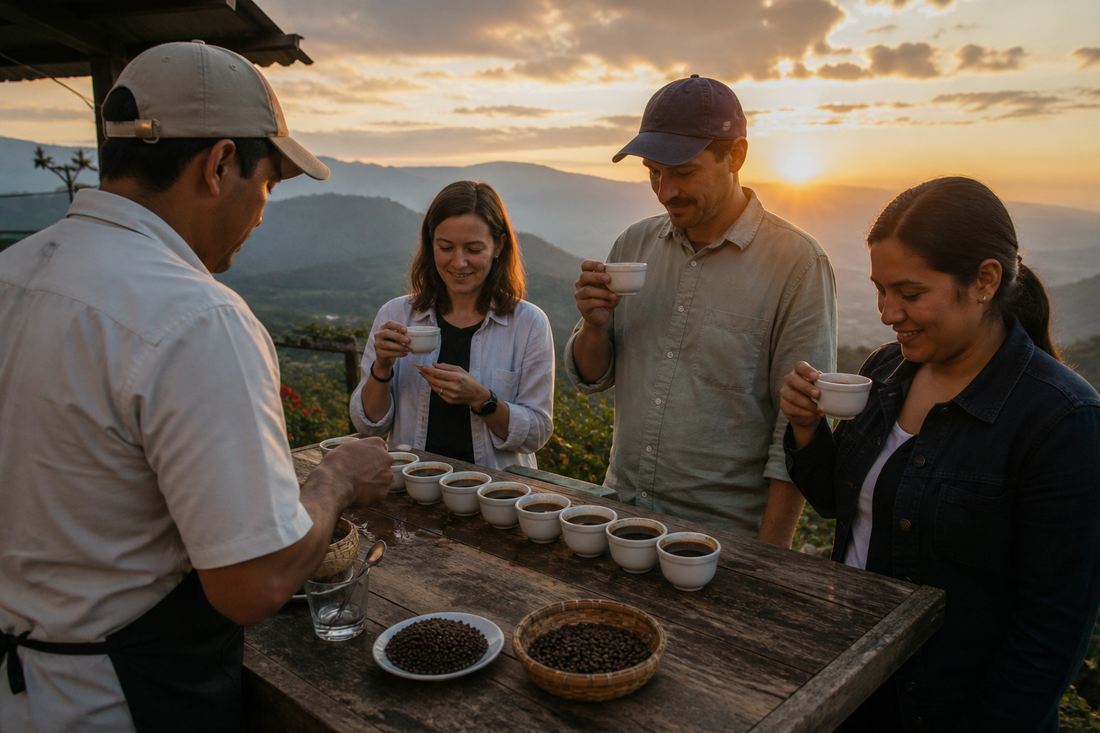


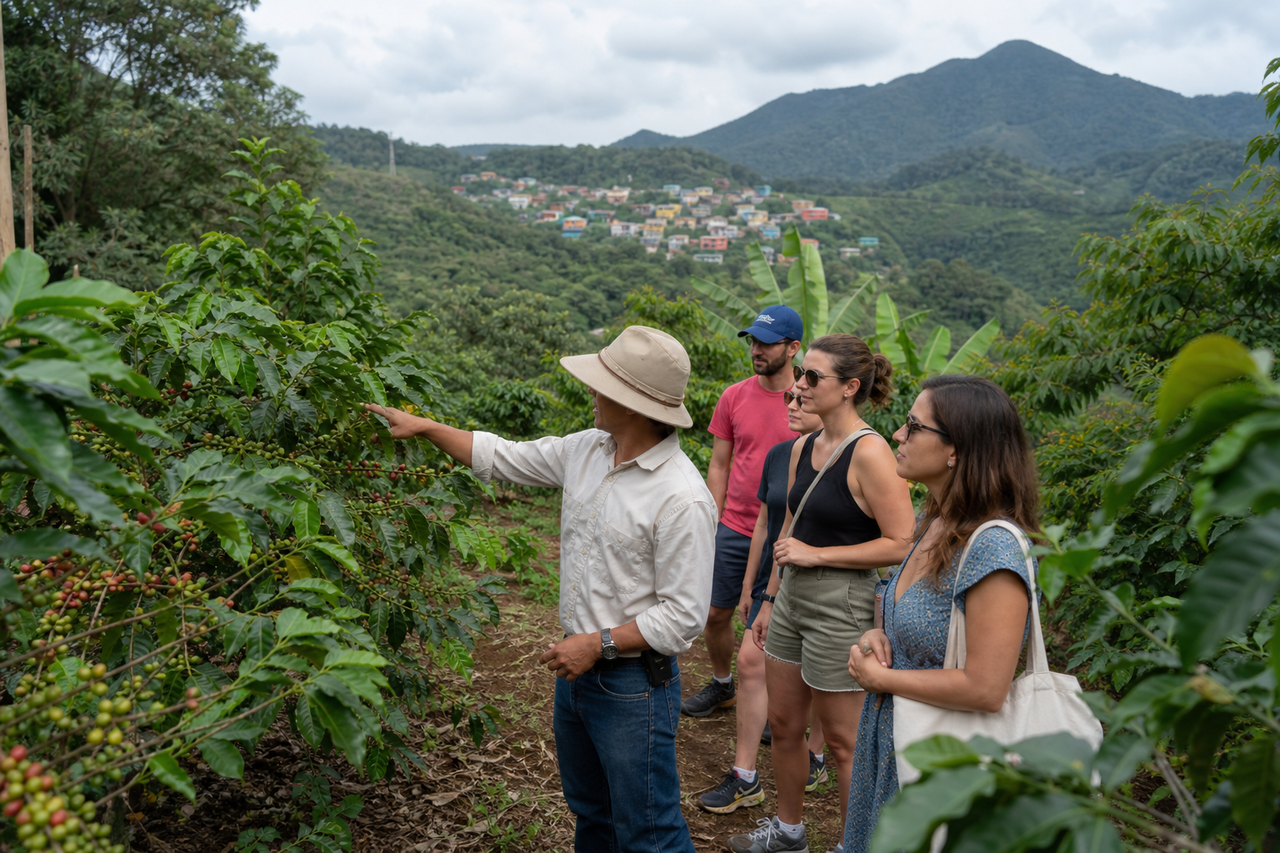
In April 2025, when international tourism was pushing domestic coffee consumption in El Salvador, the Apaneca-Ilamatepec range offered something no supermarket can sell: walking among coffee trees, seeing ripe cherry and understanding why Pacamara was born in these mountains. The Ilamatepec project of the International Trade Centre (ITC), funded by the European Union, works with about 60 businesses — tour operators, hotels, restaurants, artisans and coffee producers — to turn that experience into service exports and reputation.
Cooperativa Los Ausoles, with its COAUSOLES processing plant in Ahuachapán, is one of the benchmarks. With more than 120 members and 47 years of history, the cooperative controls the path from cherry to exportable cup. In 2025, with Ilamatepec support, it opened its coffee heritage to visitors: renewed signage, visual identity, website and a certified guide dedicated exclusively to the tour. It did not invent tourism; it gave shape to a door that had been ajar for decades.
Coffee route, orange tourism and DO
Apaneca — at 1,470 meters, the country’s highest town — connects with Juayúa, Concepción de Ataco and the Ruta de las Flores corridor. Orange tourism, according to the ITC, centers the experience on culture, creativity and community: workshops, art routes, food festivals and farm visits. In Apaneca, that translates into canopy over coffee forest, mountain lagoons and tours where the visitor learns honey, washed or natural process in the same place where cherry is picked.
The Café Apaneca Ilamatepec denomination of origin, recognized by the Salvadoran Coffee Institute and valid in the European market, adds a legal layer to the tourism narrative. It is not enough to say “mountain coffee”: the DO delimits altitude — from 900 meters — municipalities and quality rules. The visitor who buys a COAUSOLES package or tastes a Pacamara at an Ataco bar drinks geography with institutional backing.
What the producer gains and what the visitor learns
For the cooperative, tourism diversifies income when international price fluctuates. For the traveler, it is sensory education: telling high-altitude acidity, volcanic sweetness and the weight of shade in the cup. Casa de Europa documents Ilamatepec technical missions to farms with DO in Apaneca-Ilamatepec and Bálsamo-Quezaltepec, with training in sustainability and competitiveness.
Anyone discovering El Salvador through the coffee route in 2025 has a simple task: ask for the variety, the process and the cooperative. Apaneca is not an Instagram backdrop invented for tourists; it is a biosphere reserve, the birthplace of Pacamara and a laboratory where about 60 businesses — COAUSOLES among them — turn the mountain into hospitality. Coffee is exported in bags; it is also exported in the memories of those who walked the farm before the first sip.