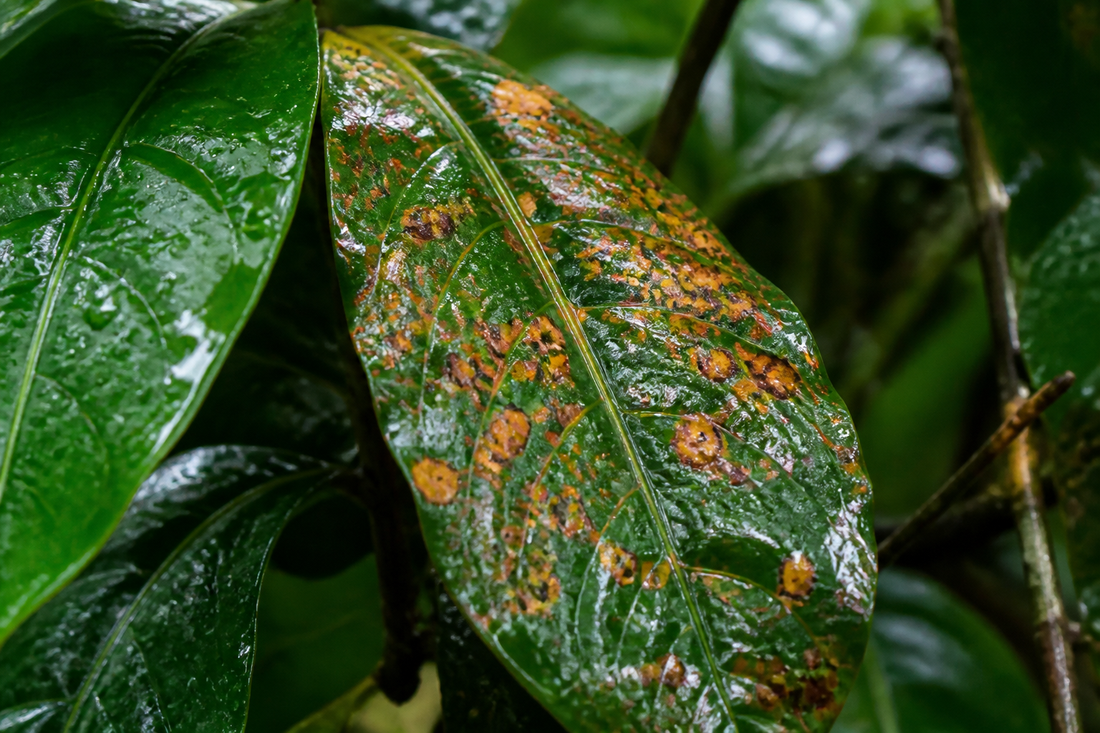


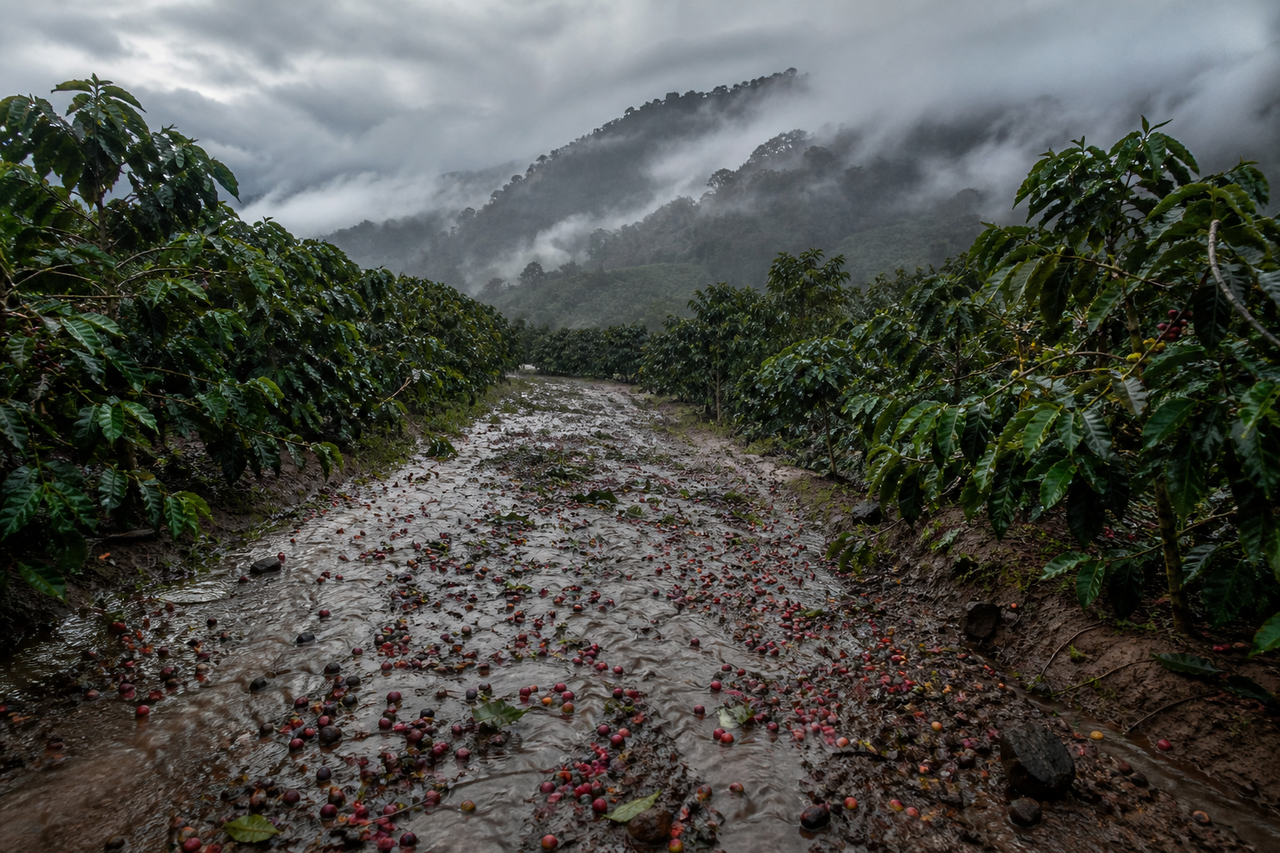
Between 31 May and 7 June 2020, tropical storms Amanda and Cristóbal crossed El Salvador with intense rain, wind and landslides. For the coffee sector, already facing the COVID-19 pandemic with mobility and market restrictions, the climate blow arrived in the middle of harvest and preparation for the next cycle. ACAFESAL, the Association of Coffee Growers of El Salvador, documented estimated losses of 150,000 quintales of coffee. Omar Flores, the association’s spokesperson, pointed to leaf rust outbreaks favored by persistent moisture on leaves.
OCHA — the UN Office for the Coordination of Humanitarian Affairs — recorded 500 to 800 millimeters of rainfall in different parts of the country during the event. Those figures are not abstract: in the mountains they mean saturated soils, cut roads, cherries falling before ripening and difficulty drying beans on patios and in guardiolas.
What happens to a coffee farm when it rains too much
Coffee needs water, but in precise doses and timing. Continuous rain during harvest causes premature cherry drop, unwanted fermentations in the fruit and greater risk of mold and fungi at the mill. Leaf rust, in humid warm conditions, spreads quickly: orange spots on the underside of leaves, defoliation, weakened plants and lower output in the following harvest.
For the specialty producer, damage is not only volume. A lot destined for microlot can lose quality if cherries swell, crack or fall to the ground. Beans arriving at the mill with defects rarely reach the 84 points premium markets expect. Amanda and Cristóbal did not only subtract quintales; they altered the quality curve of a harvest many had prepared with care.
Institutional response and COVID context
The Ministry of Agriculture and Livestock (MAG) mobilized a US$5.6 million agricultural support package within the emergency framework, according to reports compiled by ReliefWeb. The figure aimed to mitigate damage across several sectors, not coffee alone, but coffee growers were among the most exposed because of the climate-and-pandemic combination. With fairs canceled, buyer visits suspended and logistics disrupted, recovering income was slower than in normal seasons.
The pandemic compounded the picture: less labor available for picking, difficulty transporting wet parchment, uncertainty in international prices. A grower who lost part of the harvest to Amanda and Cristóbal counted not only quintales but also whether they could sell in time at a price that covered farm renovation.
Lessons for those who buy Salvadoran coffee
Understanding events like these helps read the origin honestly. El Salvador is small, mountainous and exposed to Pacific and Atlantic cyclones that, even without making landfall as major hurricanes, leave extreme rainfall. National production had already fallen since the 1990s; each hard season delays plant renewal, rust treatments and reinvestment in wet milling.
For the roaster, the lesson is not to avoid the origin, but to value traceability and direct relationships with producers who, year after year, replant, dry with care and bet on quality despite the climate. Later harvests — 2021, 2022 — showed the Salvadoran mountain can respond with excellence cups when conditions allow. Amanda and Cristóbal recalled the origin’s other face: vulnerable, but also resilient when the field receives support and the market pays for the cup, not only the sack.