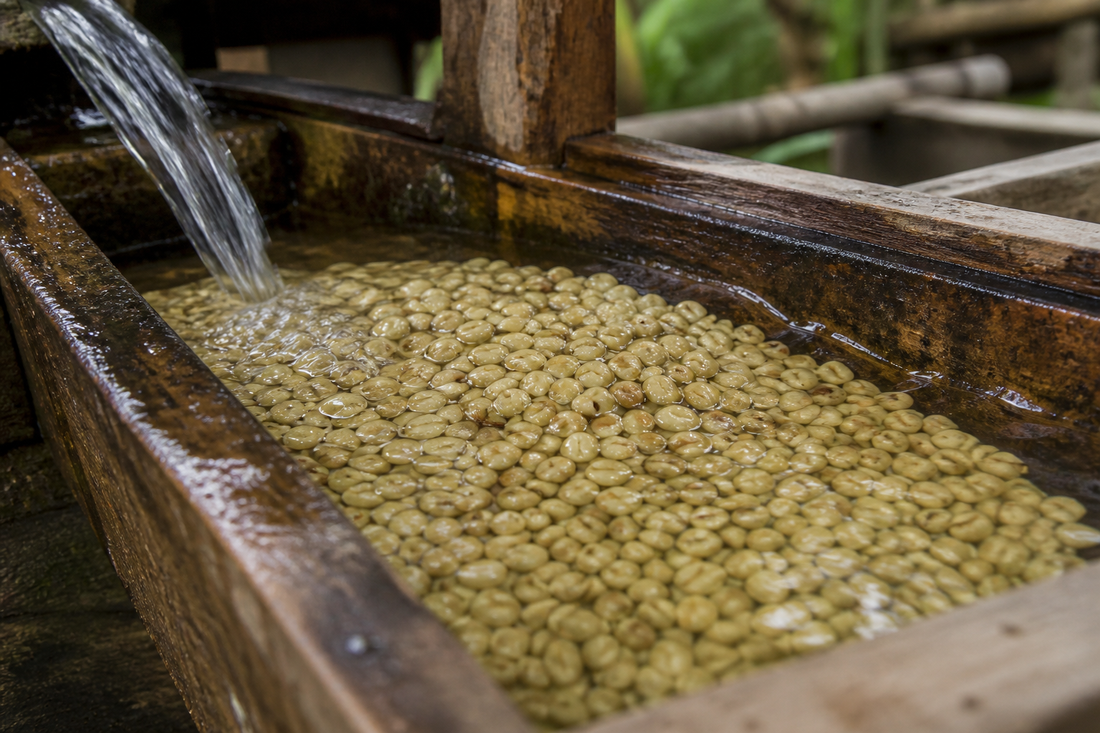


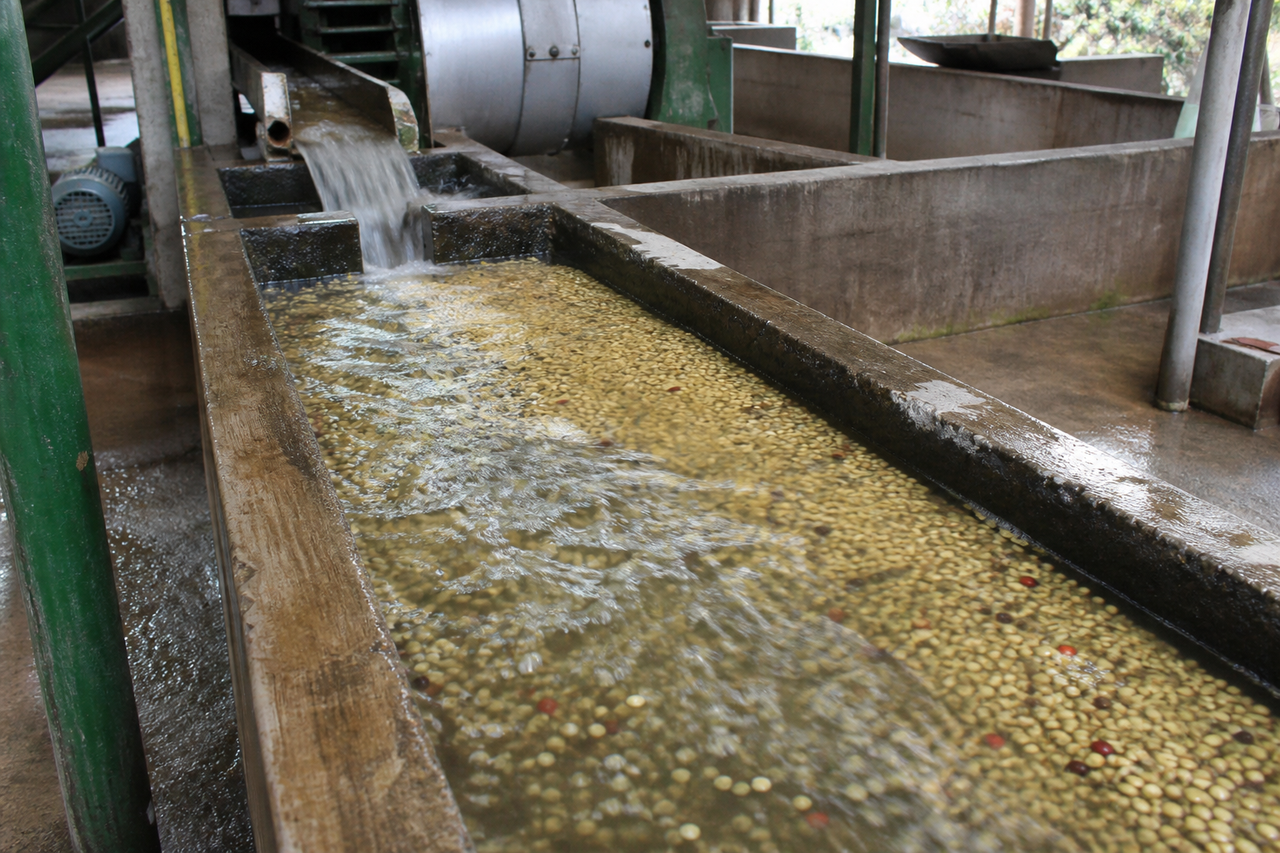
Between crystal-clear washed and generous honey lies a third path: semi-washed — also called semi-lavado, or in some mills a controlled “wet pass.” After pulping, the bean keeps part of the mucilage, but receives partial rinses or shortened fermentation before drying. It is not prolonged honey nor full wash: it is fine regulation of sugars and acidity. In El Salvador, that technique partly explained Finca Mileydi’s semi-washed Pacamara at 91.68 points at Cup of Excellence 2021, documented by the Alliance for Coffee Excellence and covered in specialty press such as Global Coffee Report.
Mileydi, in La Palma, Chalatenango, within Alotepec-Metapán, was already known for competition consistency. Semi-washed was not a fashion trick: it was a bet on a clean yet expressive cup, where Pacamara — large bean, juicy acidity and flower — could shine without the extra weight of a natural or the extreme austerity of long-channel washed.
How it differs from full washed and honey
In full washed, mucilage is almost completely removed in water; acidity is often more vertical and the cup more transparent. In honey, mucilage stays in greater proportion throughout drying; body and sweetness grow, with more risk of unwanted fermentations if climate does not cooperate. Semi-washed removes an intermediate fraction: it may include 12–24 hours of tank fermentation in clear water, a partial final rinse and bed drying. The typical result is defined citrus acidity, panela or peach sweetness and medium body, with less phenolic load than a natural.
For the cupper, the difference shows in balance. A highland Pacamara washed can feel floral and light in body; honey from the same lot adds honey and ripe fruit. Semi-washed does not choose an extreme: it seeks the line where acidity invites another sip and sweetness rounds without cloying. That is why it fits CoE juries trained to reward cleanliness and complexity together.
When it makes sense in the Salvadoran origin
Semi-washed demands very ripe cherry and time control: one rinse too many and the lot behaves like washed; too few and it behaves like honey. In Chalatenango, cold nights help slow harsh fermentations; in Apaneca, the grower must watch humidity during drying. It is not a process for industrial volume without supervision; it is microlot craft.
Whoever buys or lists a Salvadoran semi-washed should ask: fermentation hours, share of mucilage removed, drying days. Those variables explain more than the English name on the label. Mileydi 2021 showed that El Salvador masters not only classic Bourbon and Metapán honeys but also intermediate processes that teach the market to read nuance. Semi-washed is, in one phrase, the cup that wants to be clear and sweet at the same time — and in the mountains of Chalatenango, it sometimes achieves both.