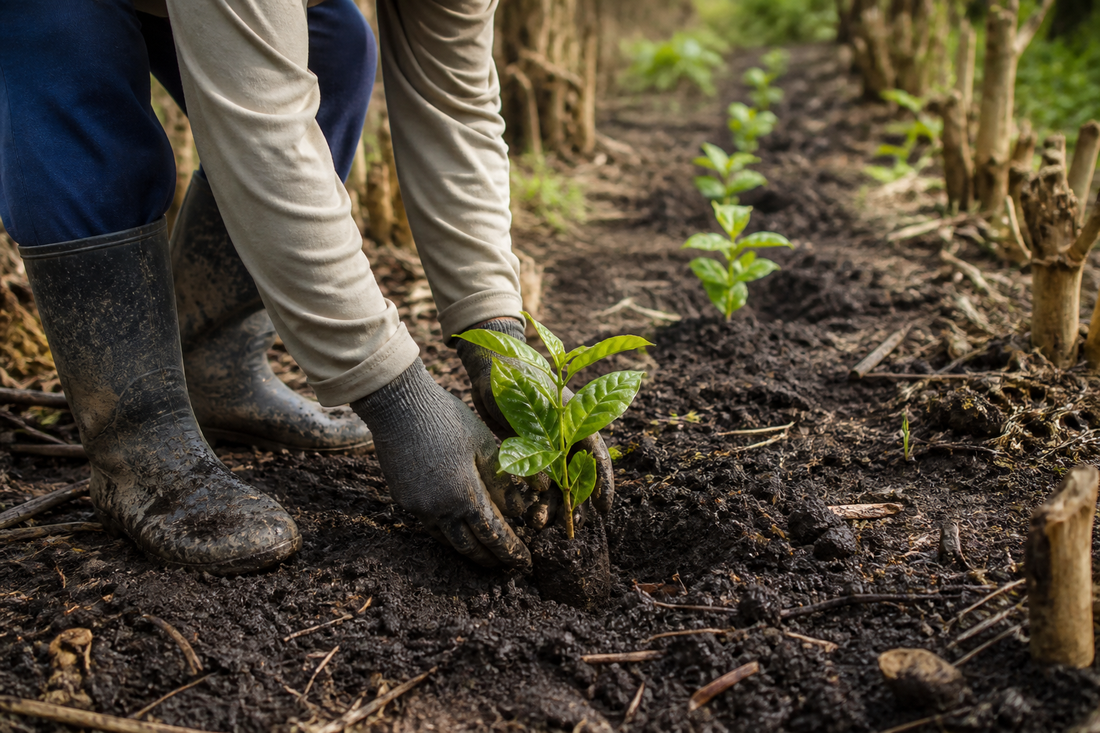


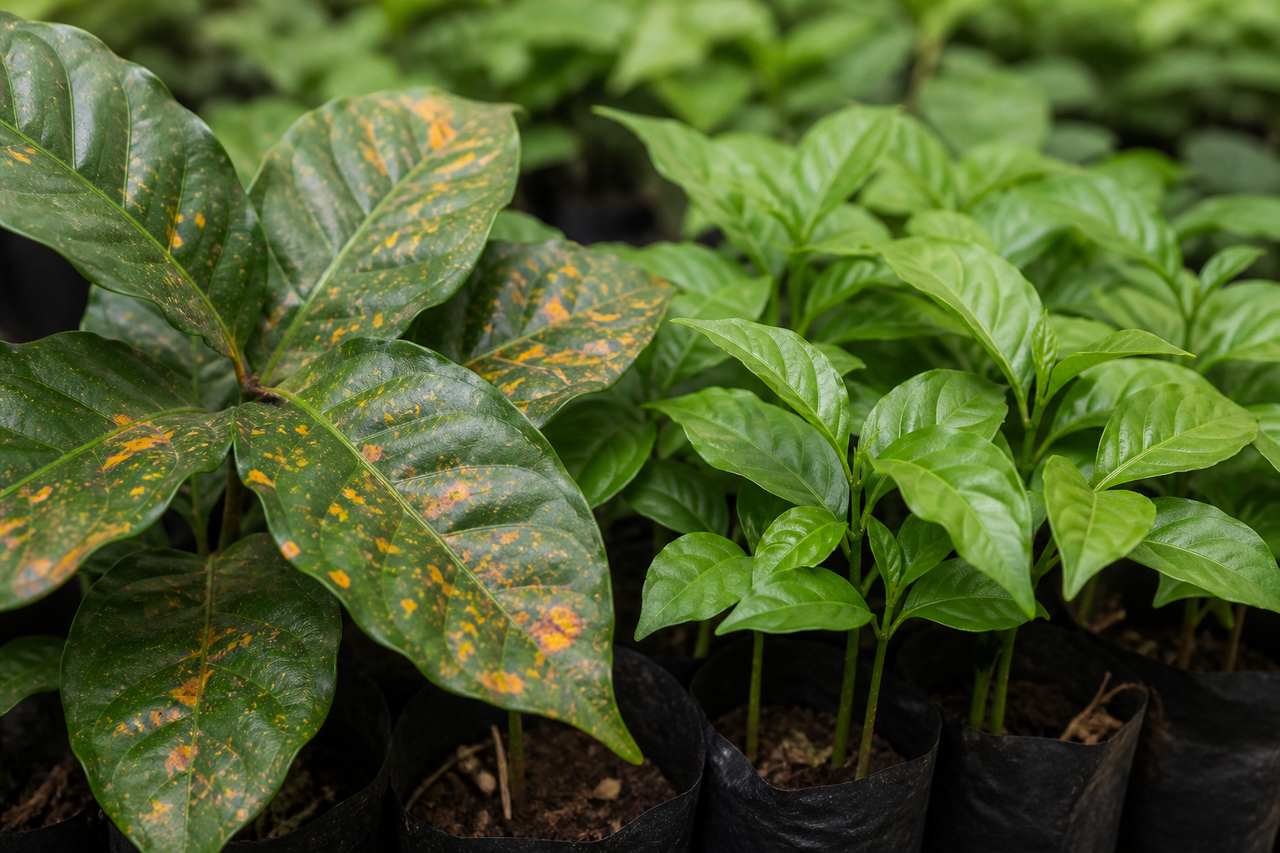
Leaf rust (*Hemileia vastatrix*) is not a footnote in Salvadoran coffee history: it is a chapter that redrew the coffee park after the severe wave following 2012–2013. Spotted leaves, premature drop, bare branches and lost production forced growers, institutes and partners to an urgent question: what to plant after disaster? The answer mixed technical assistance, nursery deliveries and varieties with greater genetic resistance to rust, without fully giving up the flavour the market demands.
USDA Foreign Agricultural Service reports documented for years the drop in production and replanting effort in El Salvador. The Ministry of Agriculture and Livestock (MAG) and projects with international cooperation pushed plant delivery campaigns to affected farms — news also covered by outlets such as El Salvador in English in 2023, when the government reinforced renewal targets. It is not only about volume: it is biological reconstruction of the coffee landscape.
Varieties that entered the debate
Cuscatleco — developed in Central America from crosses that include resistant lines — was proposed as a productive option with acceptable commercial profile. Marsellesa and Sarchimor (Catimor family) appeared in replanting programmes for rust tolerance and predictable agronomic behaviour. Anacafe 14, from Guatemala, also circulated in regional recovery conversations. None alone replaces contest Pacamara or microlot Bourbon; they serve another function: keeping grower income alive while specialty plots are rebuilt.
The didactic lesson is twofold. First: resistance is not betrayal of flavour — it is survival insurance. Second: a boutique origin needs healthy parks to keep exporting rarities; without a productive base, there is no sustainable Gesha or anaerobic lot.
Bernardina and the Salvadoran nuance
Not all the response came from abroad. Bernardina, a variety discovered in El Salvador and profiled by World Coffee Research, shows greater relative tolerance to rust than typical Bourbon, plus a distinctive sensory profile — flower, fruit, sweetness. It is not immune; no variety fully is. But it shows renewal can include local genetics with cup value, not only emergency clones.
For the buyer, understanding rust explains supply and price swings. For the grower, choosing variety is a 15–20 year bet: resistance, altitude, target market, harvest cost. Cuscatleco in lower zones and Pacamara on a competition plot can coexist on one farm with different logics.
Toward a more diverse park
El Salvador emerged from the crisis with a more heterogeneous park: Bourbon and Pacas where climate allows; resistant lines where rust pressure remains high; Bernardina and Pacamara where the market pays for quality. USDA and MAG are useful sources to track deliveries and targets; the ISC remains the compass for cup quality.
Whoever drinks Salvadoran coffee benefits from that renewal without seeing the spotted leaf: behind every stable microlot are living trees. Rust taught hardship; Cuscatleco, Marsellesa, Sarchimor, Anacafe 14 and Bernardina teach that genetics is the first line of defence — and the base on which the origin grows again.