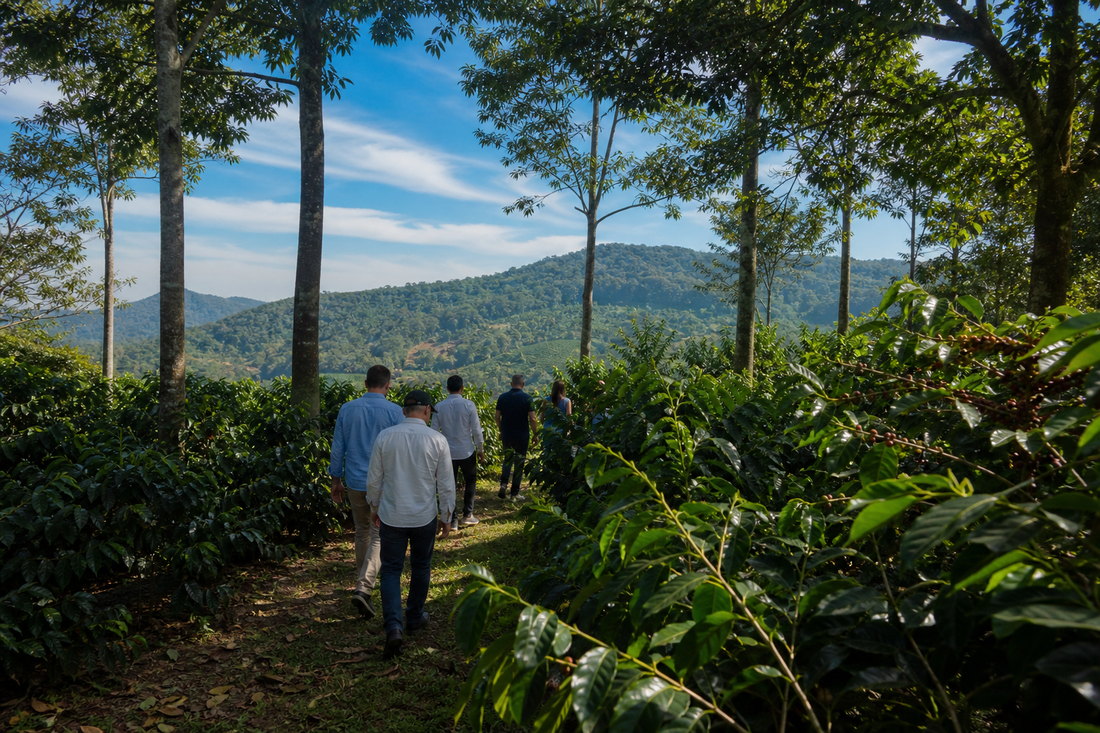


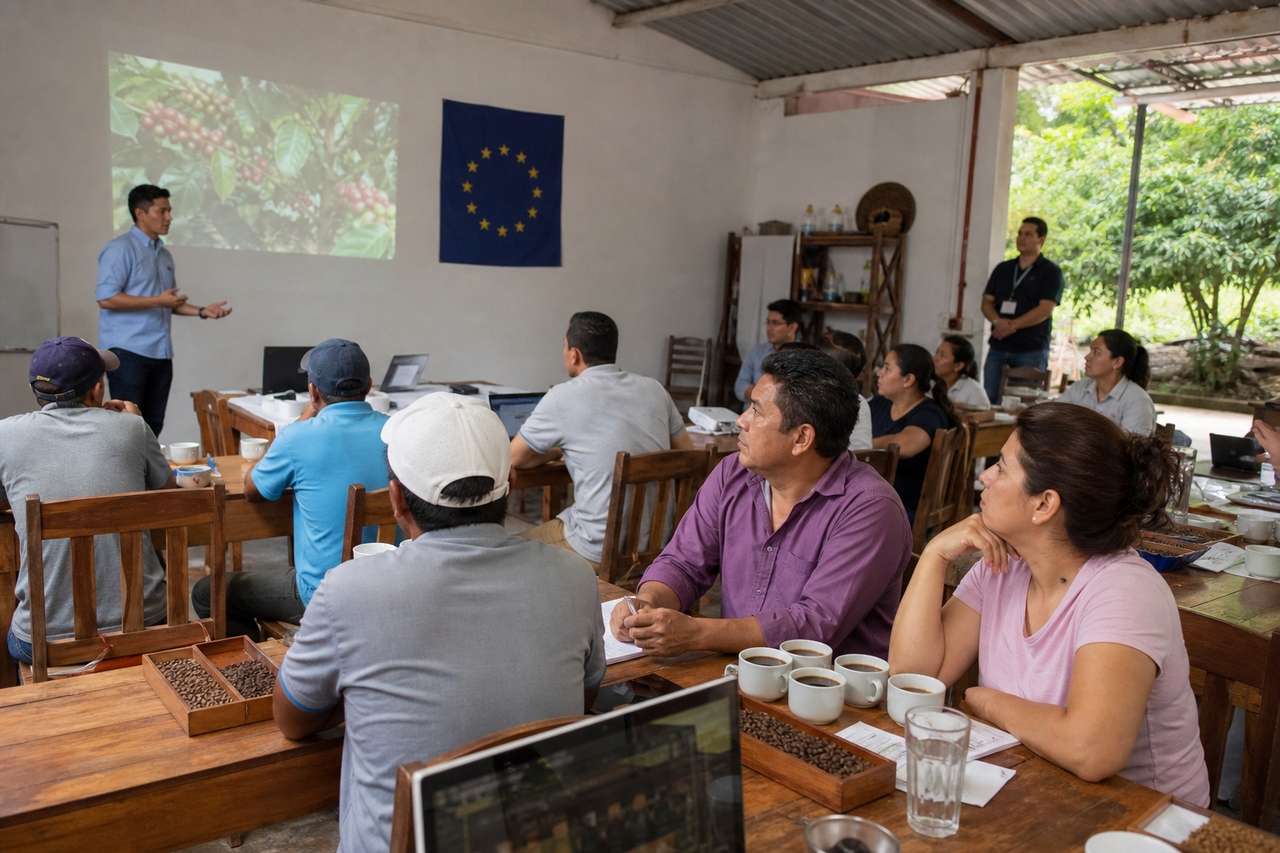
In June 2024, a trade mission took Salvadoran producers through farms in Apaneca-Ilamatepec and El Bálsamo-Quezaltepec, two of the country’s six designations of origin. It was not a tourist tour. It was the visible face of the Ilamatepec project, a $7 million alliance financed by the European Union and implemented by the International Trade Centre (ITC) together with the Ministry of Economy (MINEC) and the Salvadoran Coffee Institute (ISC).
The goal is concrete: prepare the sector for sustainable exports to the European Union at a time when Brussels demands more than cup quality. The EUDR regulation (on deforestation-free products) requires proof that coffee does not come from areas deforested after 2020. For a mountain origin like El Salvador — where coffee grows alongside shade forest — the rule is both an administrative challenge and an opportunity for differentiation.
What the project does on the farm and in the classroom
ITC has delivered EUDR training courses — including one in November 2024 — aimed at exporters, cooperatives and ISC technicians. Content covers plot geolocation, chain of custody, documentation for European customs and alignment with designations of origin the country promotes at fairs such as World of Coffee.
In the field, the project reinforces practices the European buyer already values: tree shade, mill water management, farm-to-bag traceability. The Ilamatepec and Bálsamo regions — names the German or Belgian consumer is beginning to recognise — are the laboratory where sustainability and specialty are tested as compatible.
Why it matters for those who buy Salvadoran coffee
Europe is the second export axis after the United States. Without EUDR compliance, an excellent bag can be shut out of the market. With compliance, it gains narrative: the roaster in Hamburg or Antwerp can tell that the lot comes from a georeferenced farm on the Santa Ana volcano range, with Apaneca-Ilamatepec DO and backing from an EU-financed project.
For the small coffee farmer, Ilamatepec means access to knowledge that used to be expensive: maps, training, contact with buyers on missions such as that of June 2024. For the end consumer, it means the cup paid for in Brussels or Berlin arrives with less legal uncertainty and more verifiable story.
The project does not solve climate or leaf rust alone; it solves market access in the most demanding decade of coffee trade history. Discovering this origin in 2024 means finding a country that learned to export not only beans, but proof of clean origin. Ilamatepec links volcanoes, institutions and European regulation in a single chain — and teaches that sustainability, when well documented, becomes competitive advantage.