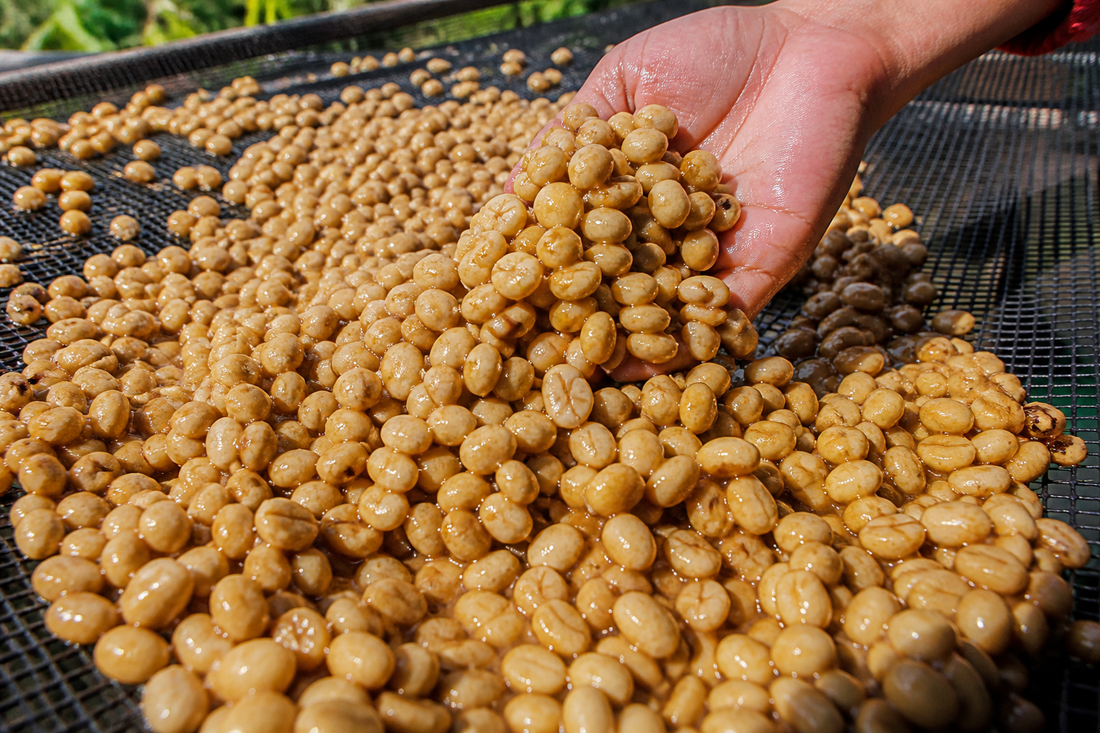


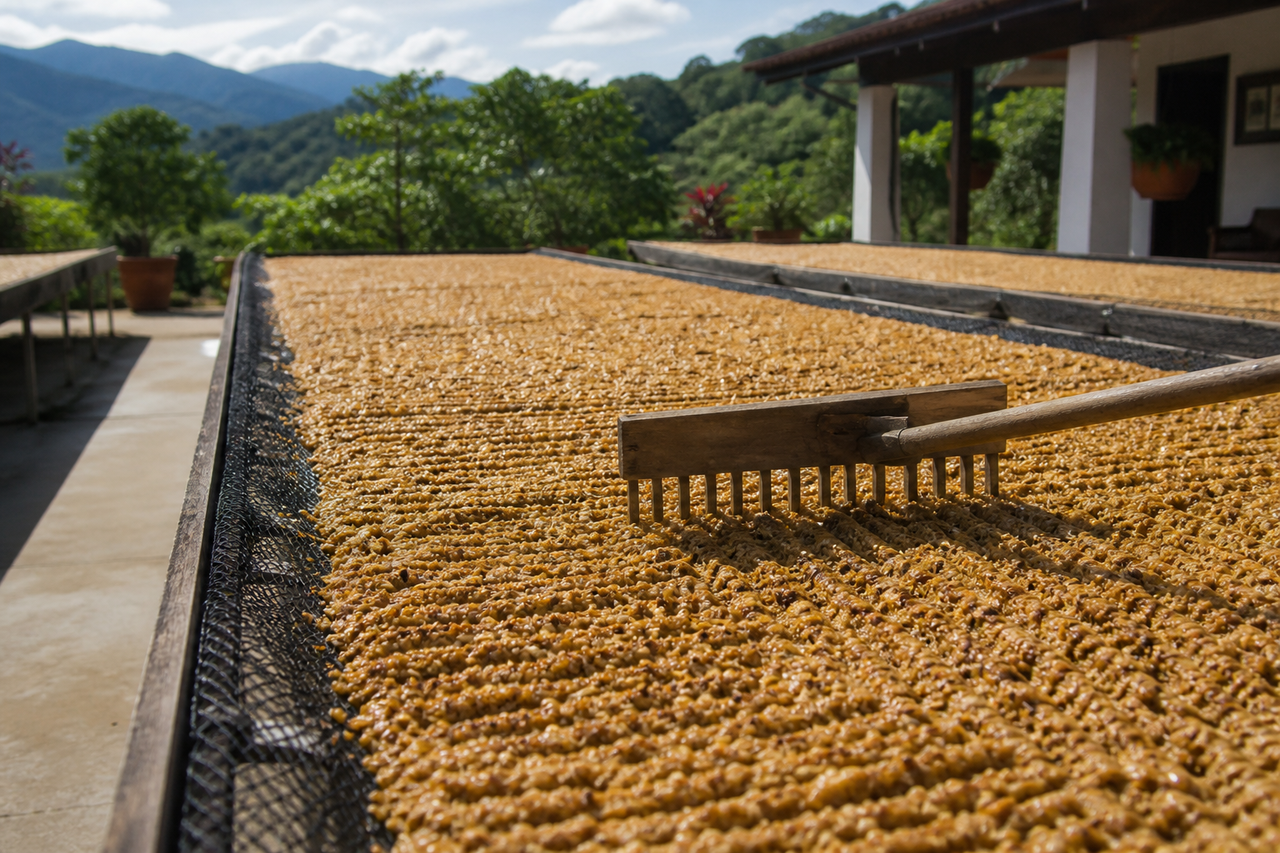
“Honey” is not added honey or a synonym for natural. It is a processing method in which, after pulping, part of the mucilage — the sugary layer around the bean — remains on the parchment while the coffee dries on raised beds or patios, with frequent turning and humidity control. The name comes from the amber colour of the bean during drying, not from an extra ingredient. In El Salvador, where highland Pacamara and Bourbon already bring natural sweetness, well-executed honey concentrates body and honey notes without fully giving up washed cleanliness.
Understanding the process helps read the menu. After selective picking, cherry goes through pulping: pulp is removed, but not all mucilage. The more mucilage left — sometimes described as yellow, red or black honey by retained fraction — the more surface fermentation during drying and the more fruit and body appear in the cup. The risk is excess: poorly handled mucilage, slow drying without air or uncontrolled fermentation produce phenolic or acetic notes. Honey is craft, not a label.
What changes in the cup versus washed
A full washed process removes almost all mucilage in water; the cup is usually clearer, with sharp acidity and transparency. A natural dries the whole cherry; fruit dominates and body grows, with more variability. Honey occupies the middle ground: mucilage sugars integrate into the bean during drying, adding panela sweetness, honey, tropical fruit or peach and a silkier body. In Salvadoran Pacamara, that balance explains why competitions such as Cup of Excellence have recognised honeys from Metapán and Chalatenango — scores such as Santa Rosa’s 90.57 in 2019, or recent results from La Bendición (2024) and Santa Rosa (2025) — without the process replacing origin quality.
For the roaster, honey asks for roasting that respects sweetness: enough development for caramels without burning sugars already generous from processing. For the barista, moderate temperatures and recipes that do not wash away body usually work better than aggressive filtration in very hot water.
Good practice on Salvadoran farms
The Salvadoran Coffee Institute promotes quality standards in wet and dry milling. For honey, the practical lesson is short: ripe cherry, same-day pulping, a defined mucilage layer, bed drying with ventilation, stable final moisture (~10–11%) and parchment rest before hulling. Volcanic altitude — Apaneca, Alotepec, Chalatenango — helps: cool nights slow harsh fermentations.
Whoever buys Salvadoran honey is not buying fashion. They are buying conscious processing choice applied to genetics that already know sweetness. Ask what mucilage fraction the farm retained, how many days drying lasted and whether there was density sorting. Those answers are worth more than a colourful label. Honey shows that El Salvador masters both classic washed coffee and processes that expand body without losing the compass of a clean cup.