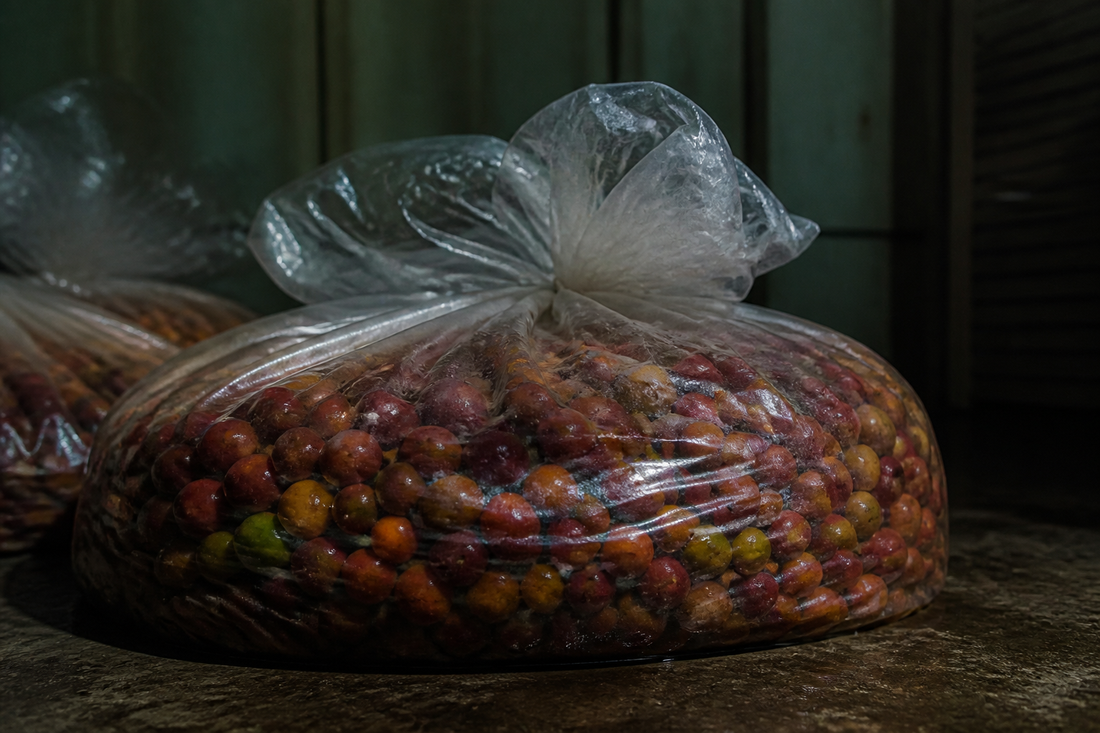


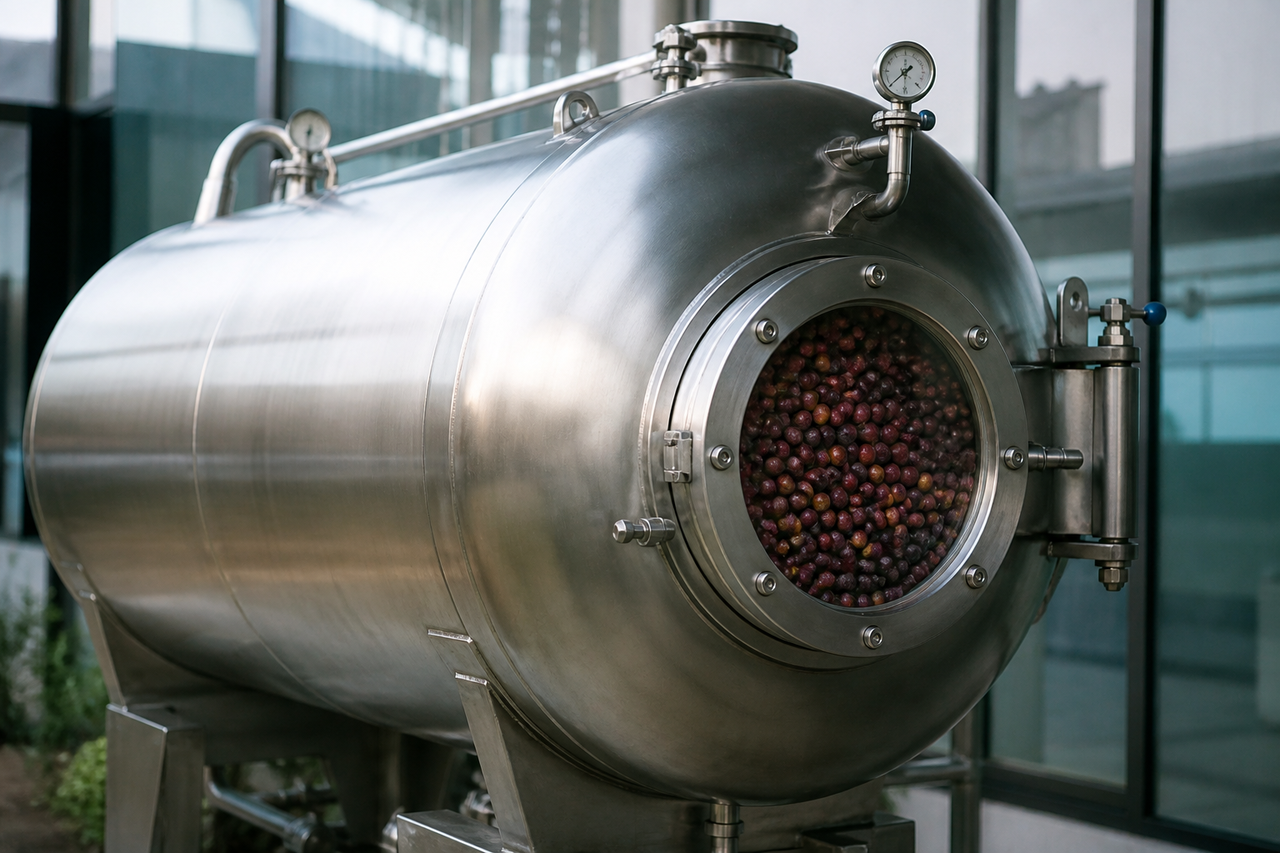
Global specialty speaks of controlled fermentations; El Salvador has been testing them on farms for years with results Cup of Excellence has cupped in public. Anaerobic natural combines two ideas: process as natural — whole cherry or high fruit/mucilage content — and subject the lot, before or during part of drying, to an oxygen-free environment (closed tanks, valves, measured times). Yeast and bacteria work under conditions different from open tanks; with rigorous control, the cup gains intense fruit, silky body and complexity; if it fails, unwanted notes appear. It is not magic: it is microbiology applied to processing.
CoE 2020 and 2021 results marked a before and after in the national conversation. In 2020, Finca Divina Providencia placed an anaerobic natural Pacamara among the edition’s most awarded and auctioned lots — proof the international market paid for cup, not only for fashion. In 2021, farms such as Siberia on the Apaneca-Ilamatepec range repeated the bet with experimental lots the international jury evaluated alongside classic washed coffees. The Alliance for Coffee Excellence published scores and profiles; the lesson is not the label name but that El Salvador competes in sensory innovation without abandoning traditional Bourbon and Pacamara.
What makes anaerobic different
In a classic natural, cherry dries in the sun with oxygen present; fermentation is slower and more variable. In washed, water fermentation is short and aimed at cleaning mucilage. Anaerobic limits gas exchange: temperature, time and pH are monitored to steer flavours — red fruit, light wine, spice, deep chocolate — depending on variety and altitude. In highland Pacamara, the technique can amplify fruit the variety already carries; in Geisha, highlight flower and tea.
For the roaster, these lots ask for conservative roast profiles at the start: enough development to integrate fermentative acidity without Maillard that mutes fruit. For the buyer, traceability is key: how many hours in tank?, temperature?, pure natural or semi-anaerobic after pulping? The answers separate serious experiment from fashion labels.
Innovation with rules
The Salvadoran Coffee Institute and origin laboratories insist innovation does not replace ripe cherry, clean water and hygienic drying. Divina Providencia and Siberia did not win by closing a tank: they won because they read CoE as a laboratory — blind cuppings, repetition, comparison with conventional processes.
The anaerobic trend does not replace honey or semi-washed; it extends them. On one farm can coexist a washed Bourbon for volume, a Pacamara honey for stable export and an anaerobic lot for auction. That enriches the roaster’s menu and teaches the consumer that El Salvador is a classic origin and an origin of disciplined experiment. Anaerobic natural is, in short, the Salvadoran bet on writing flavour with biology — and submitting it to the verdict of the international cupping table.