

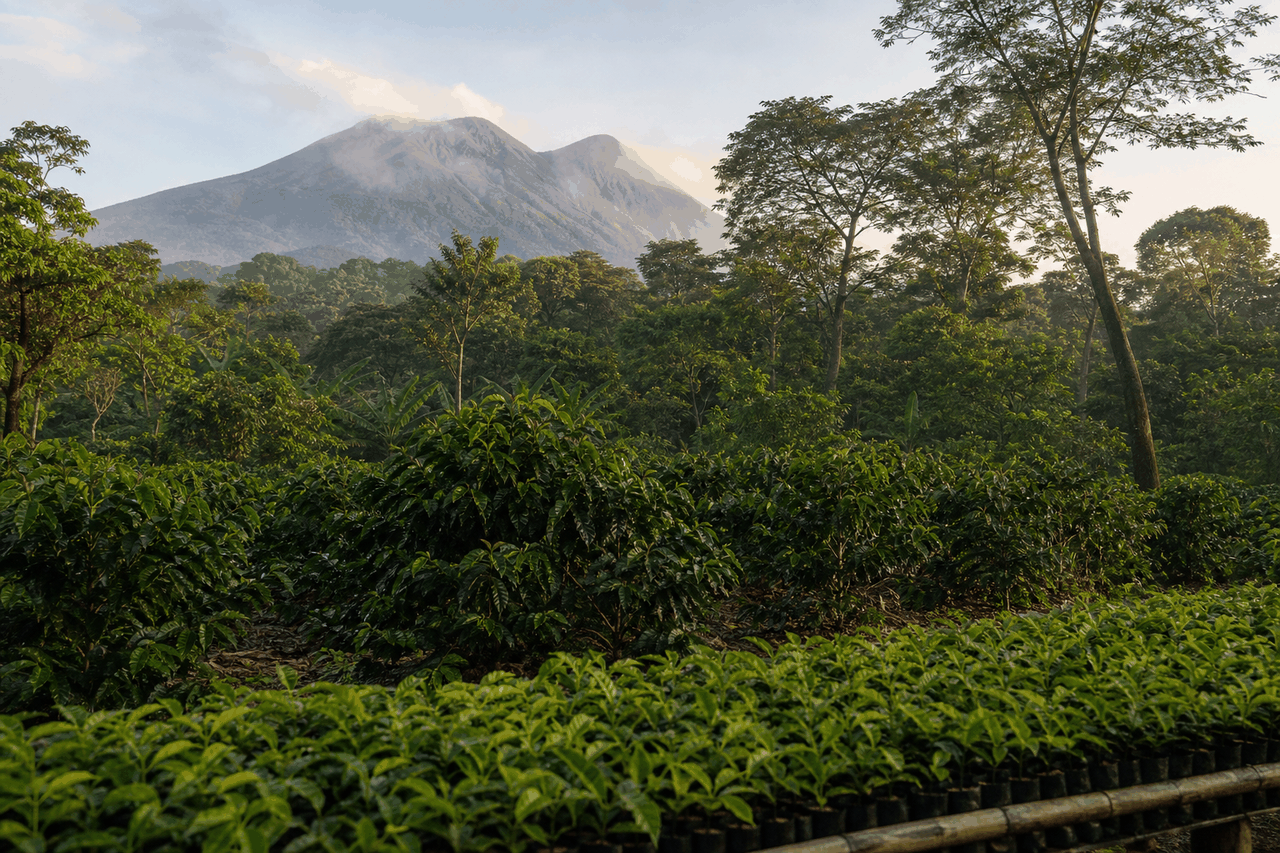
Salvadoran coffee does not live only in the grain institute. The Ministry of Agriculture and Livestock (MAG) is the country’s agricultural governing authority and the bridge between the coffee grove and the public budget. In the Master Plan for Agricultural Rescue there appears, by name, the transformation and sustainable takeoff of coffee: renew an aged tree stock, raise profitability and not lose the forest that the coffee tree’s shade still holds.
What is proposed and what has already been done
The Program to Strengthen the Climate Resilience of Coffee Forests — IDB loan 4870/OC-ES, up to 45 million dollars — is executed by MAG, with technical support from the ISC. The aim is clear: more climate resilience, more productivity and more income for small producers. Since 2022 it has reached about 3,700 coffee growers (nearly 40% women) on more than 5,300 manzanas, with innovation plots, assistance and associativity.
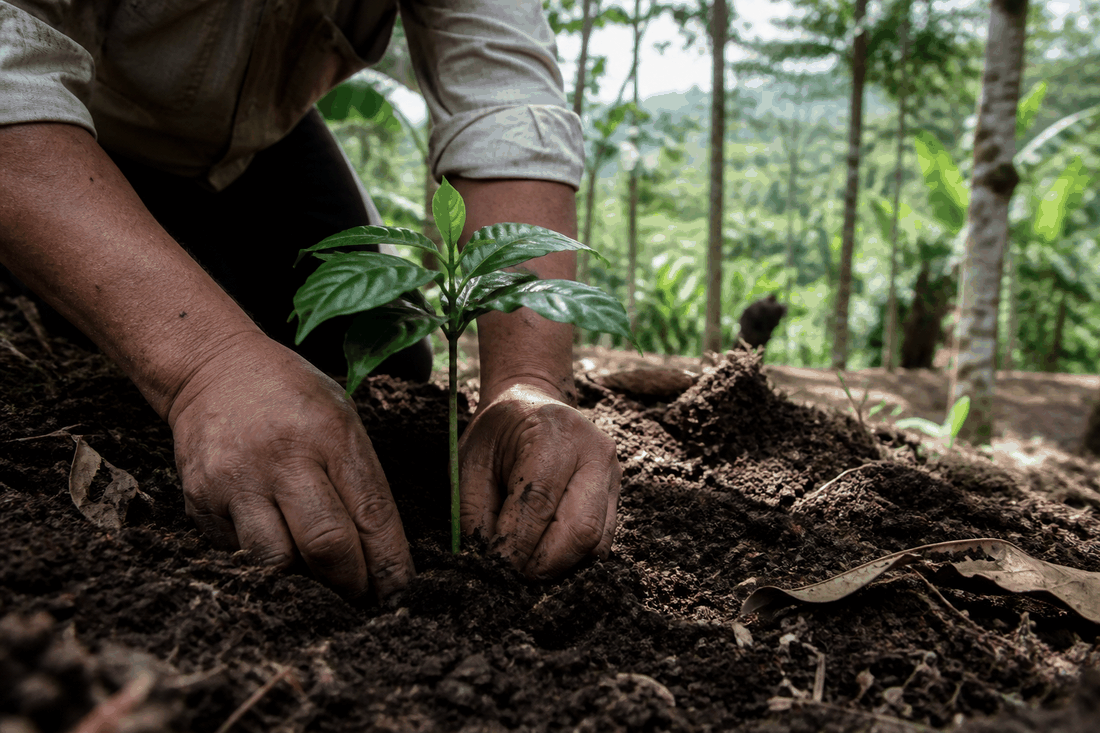
Ministerial reports put figures on renewal. In 2023–2024, 2.5 million plants and agroforestry systems on 3,841 manzanas were reported; in the following cycle, more than 3.67 million plants and 2,399 manzanas, with 1,847 producers trained and 1,559 farm plans. The marketing component provides for cooperative business plans (up to 30,000 dollars), ventures by youth and women (up to 15,000) and a marketing plan for the country brand, including a seal for women coffee growers.
There is, besides, a sanitary turn: incorporating coffee into the Program to Increase Production, with berry-borer trapping, foliar fertilization and new plantings under shade and diversification. The registry of agri-food producers is managed on MAG platforms, such as PIATEC.
Why this matters to anyone who drinks coffee
A coffee grove renewed with specialty varieties and shade trees is not only statistics. It is cleaner acidity, denser bean and a landscape that captures water and gives rural employment. MAG does not “regulate the cup” as a laboratory does; it regulates the soil, the plant and access to the program. The commitment is double: to the product — that El Salvador keep offering Bourbon, Pacamara and high-grown coffees — and to the society that lives under those trees.
Anyone who discovers the Salvadoran origin does well to look at the ministry too. The quality that captivates in Kyoto often begins in a public nursery and on an innovation plot in the six ranges.