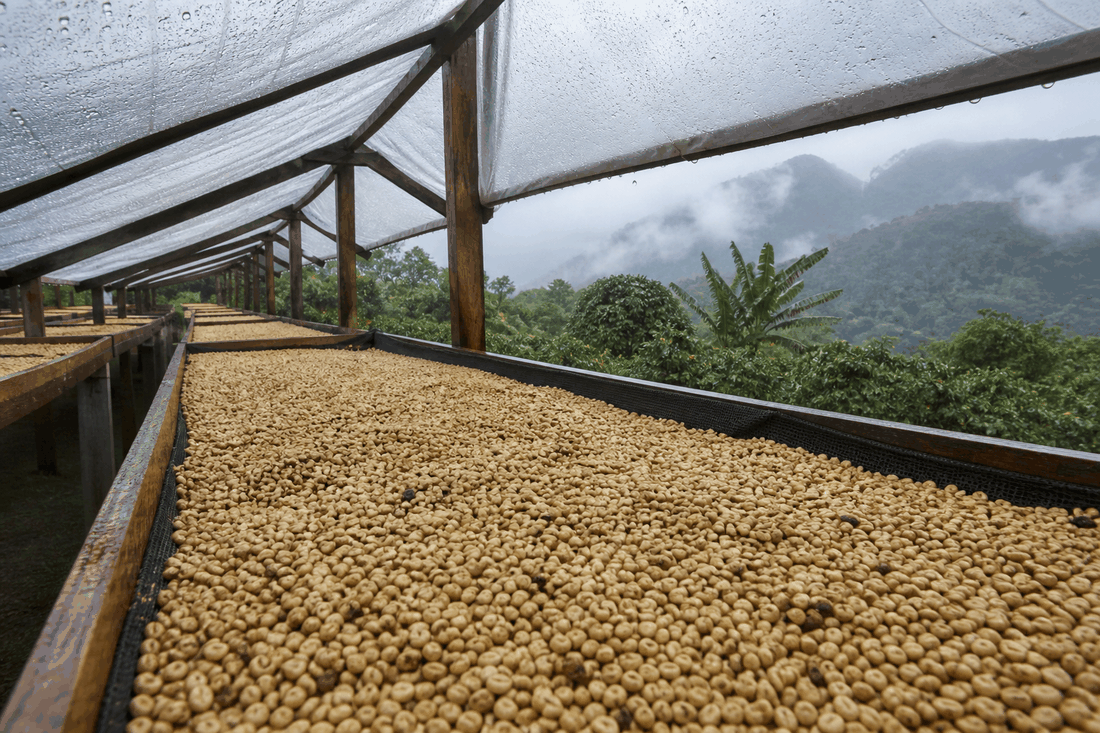


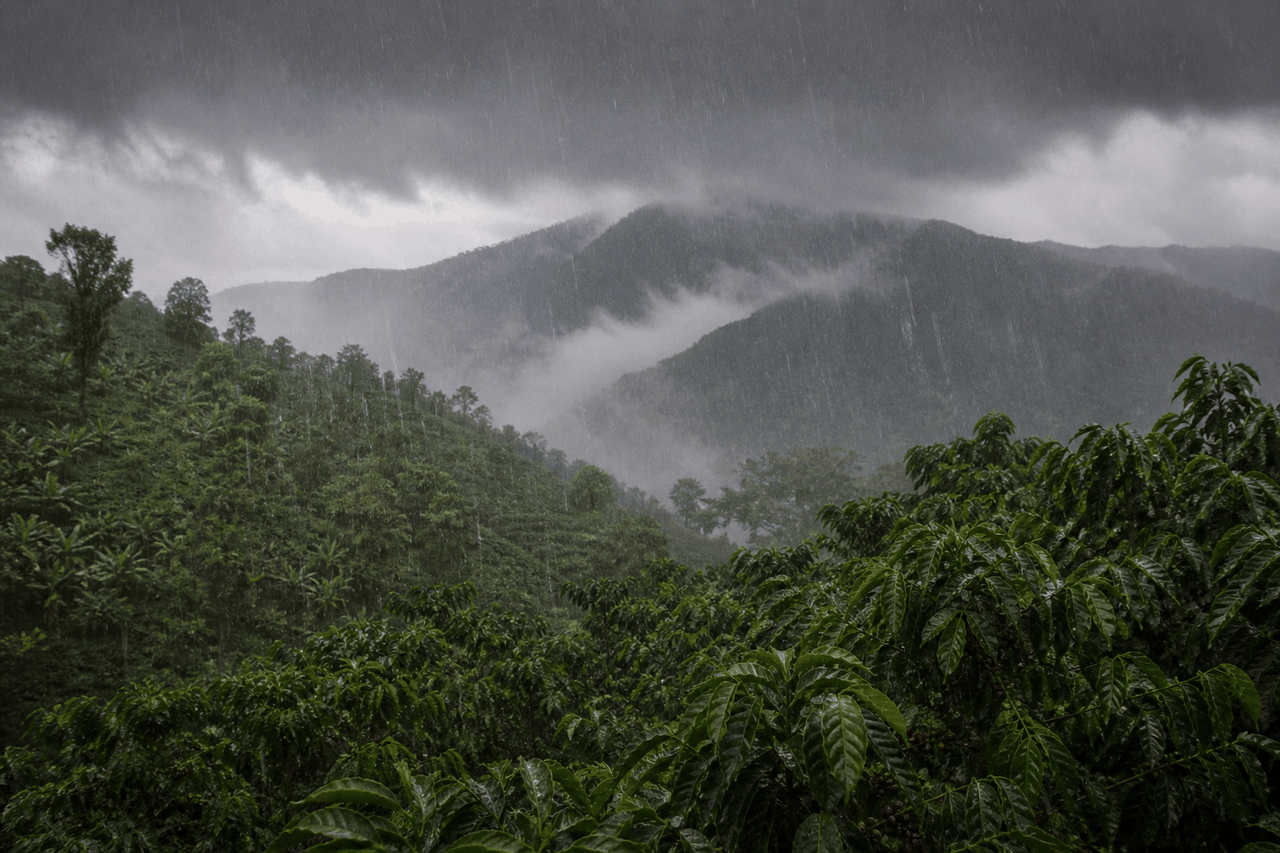
In December 2024, in the heart of the harvest window, more than 400 millimeters of rain fell in less than 24 hours, according to the USDA annual report for El Salvador. The blow was not abstract. Ripe cherries dropped; those that stayed on the branch took on too much water and, when they dried, lost density. At the mill, that means lower yield and beans that are harder to grade.
Specialty coffee lives or dies in that instant: the fruit must be picked at peak, with high sugars and taut skin. A deluge at the height of ripeness is the enemy of a clean cup. That is why Salvadoran coffee growers speak of the harvest as a race against the sky.
Why, even so, the origin remains a bet worth making
Because the same country that suffers the storm produces, on the best-exposed slopes, microlots that score above 90 points. The contrast teaches the buyer to value selection. A hard climate year does not erase volcanic terroir; it makes it more selective. Anyone who visited mills in 2025 found smaller lots and, often, more carefully tended ones: what was saved was cherished.
The USDA estimated the 2024/25 crop at 561,000 bags of 60 kilos and projected a rebound to 597,000 in 2025/26, with better weather at flowering. The figure matters, but the moral matters more: El Salvador is not an infallible commodity origin. It is a precision origin, where every quality quintal costs real effort.
What to expect in the cup after a wet year
The best lots will still smell of flower and fruit; honey and natural processes will demand even closer watch to avoid dirty fermentations. The intelligent buyer asks for samples, not promises. And when the sample shines, they pay. That is the right expectation: there is no easy abundance, there is coffee that deserves the cupping table.