

On 20 April 2026 the United States Department of Agriculture (USDA) published its *Coffee Annual* for El Salvador, report ES2026-0004. Among the harvest figures sits a paragraph that matters to those who drink and those who sell: the government increased pest surveillance, coffee quality control and participation in new export markets. The Salvadoran Coffee Institute (ISC) does not appear there only as an organizer of competitions. It appears as a laboratory.
The report specifies the package: a pest-monitoring program to anticipate leaf-rust attacks; renovation of some 500 hectares in the northern coffee belt; the addition of two quality-control laboratories in the western and eastern regions; investment in molecular biology and somatic embryogenesis equipment to protect planting material; and bean-profile analysis so that the producer can identify the quality of the coffee and improve the marketing strategy. Translated into the cup: measure in order to sell better, and reproduce healthy plants so that that cup does not die out.
Santa Tecla: the table where specialty stops being opinion
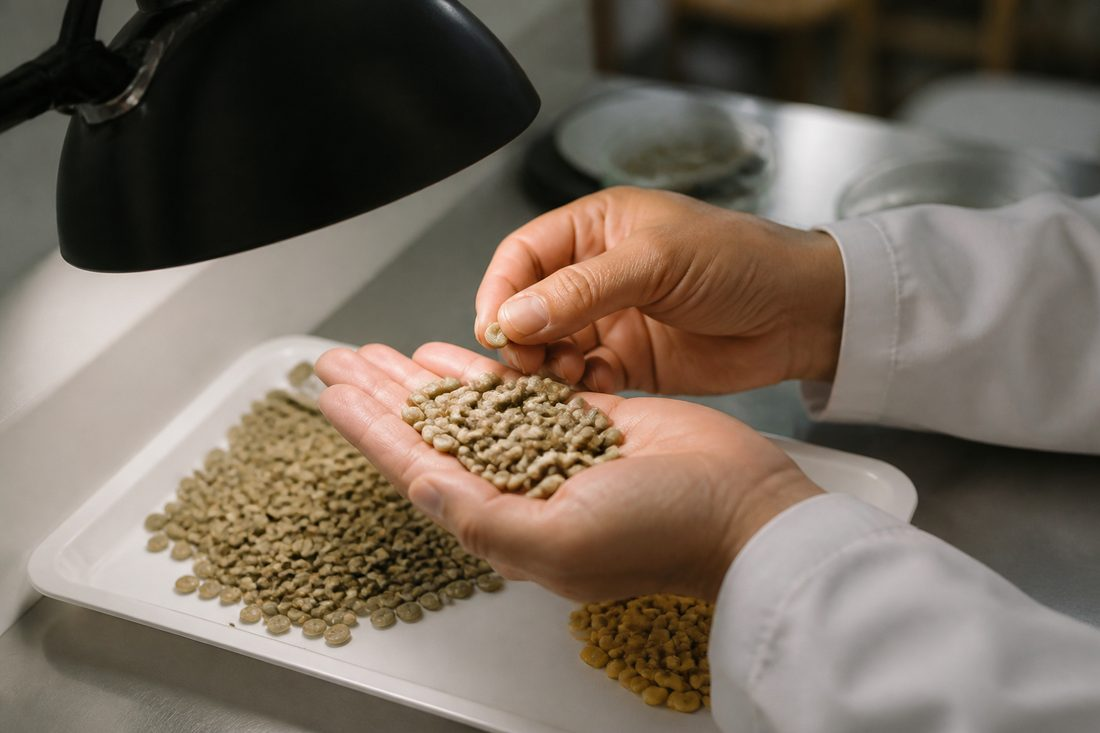
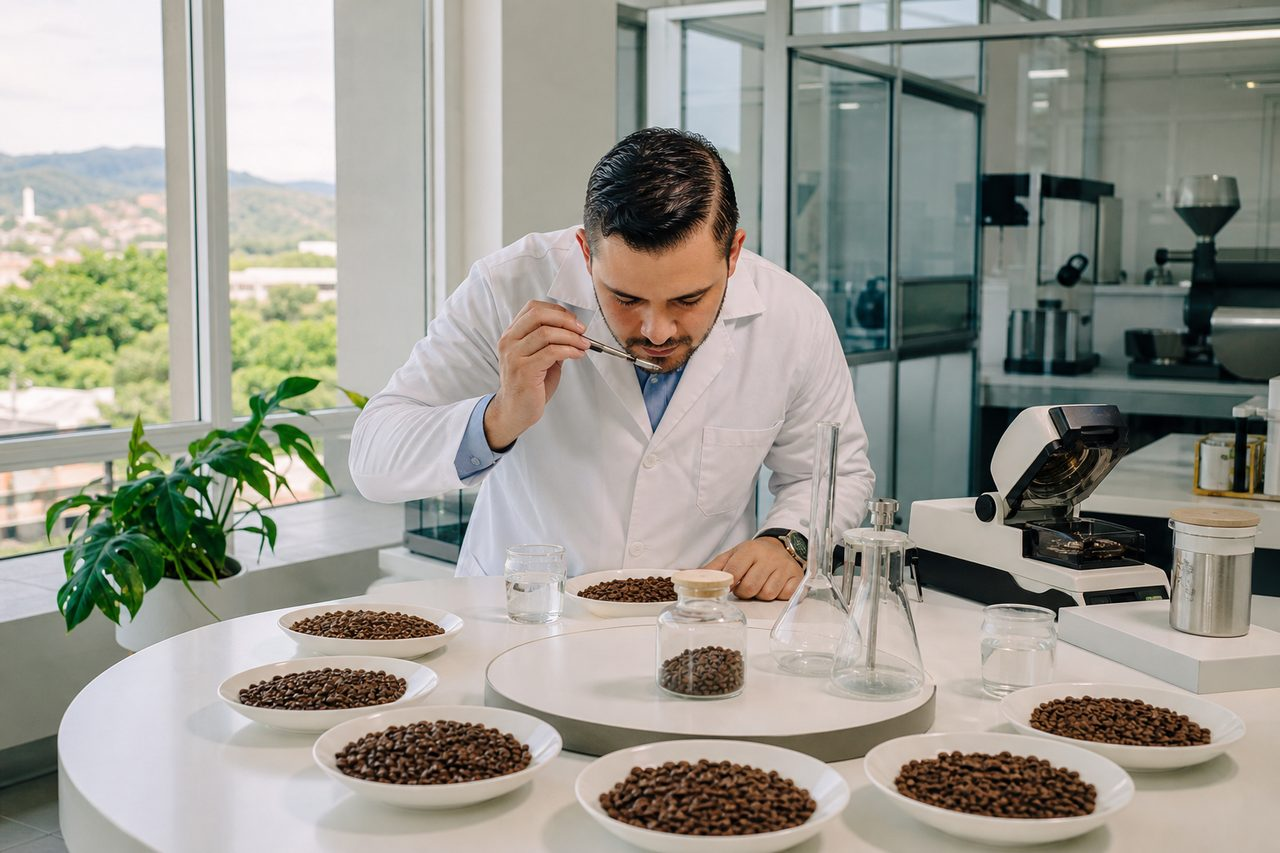
The ISC quality-control laboratory in Santa Tecla is the public counter of that policy. According to the Institute itself, the technical staff is certified as Q-Arabica Grader cuppers, with a track record as analysts. The laboratory verifies export samples and trains actors along the chain. Knowing quality, the ISC says, can allow differentiated prices abroad and access to local buyers. Without that table, specialty would be taste. With it, a farm in Usulután and a roaster in Seoul speak the same language: moisture, defects, score.
The fees, VAT included, are published: analysis of a sample in parchment and cherry, 13.56 dollars; in green (oro), 10.17; of roasted coffee, 6.78; gourmet coffee certification, 40 dollars per sample (physical analysis, sensory analysis and technical report). A minimum of 454 g of green coffee, 500 g of honey or washed parchment, or 700 g of natural cherry must be brought — quantities needed to calculate yields. Roasted coffee is presented in its packaging. Q-Arabica sample evaluation is done by a panel under Specialty Coffee Association (SCA) protocols and Coffee Quality Institute (CQI) guidelines.
The address is concrete: Final 1ª Avenida Norte and 13 Calle Poniente, Santa Tecla district, La Libertad Sur municipality, department of La Libertad. It is not an invisible laboratory. It is a window the producer can reach with a sample sack.
Why two poles — west and east — change the map
A single laboratory in the capital leaves the coffee grower of Cacahuatique or Tecapa-Chinameca far away. Two regional laboratories, west and east, shorten the sample’s journey and bring the language of cupping closer to those who harvest. The USDA frames this alongside molecular biology and somatic embryogenesis: it is not enough to cup this year’s bean; the next year’s tree must be cloned and cleaned. The cup profile — sweetness, clean acidity, body — is made in the plant before it is made in the cup.
Anyone who discovers Café de El Salvador should know that behind the contest Pacamara there is a policy of measurement. Ask for the report, not only the story. Salvadoran coffee defends itself when quality can be demonstrated in Santa Tecla — and, increasingly, in both halves of the country.