

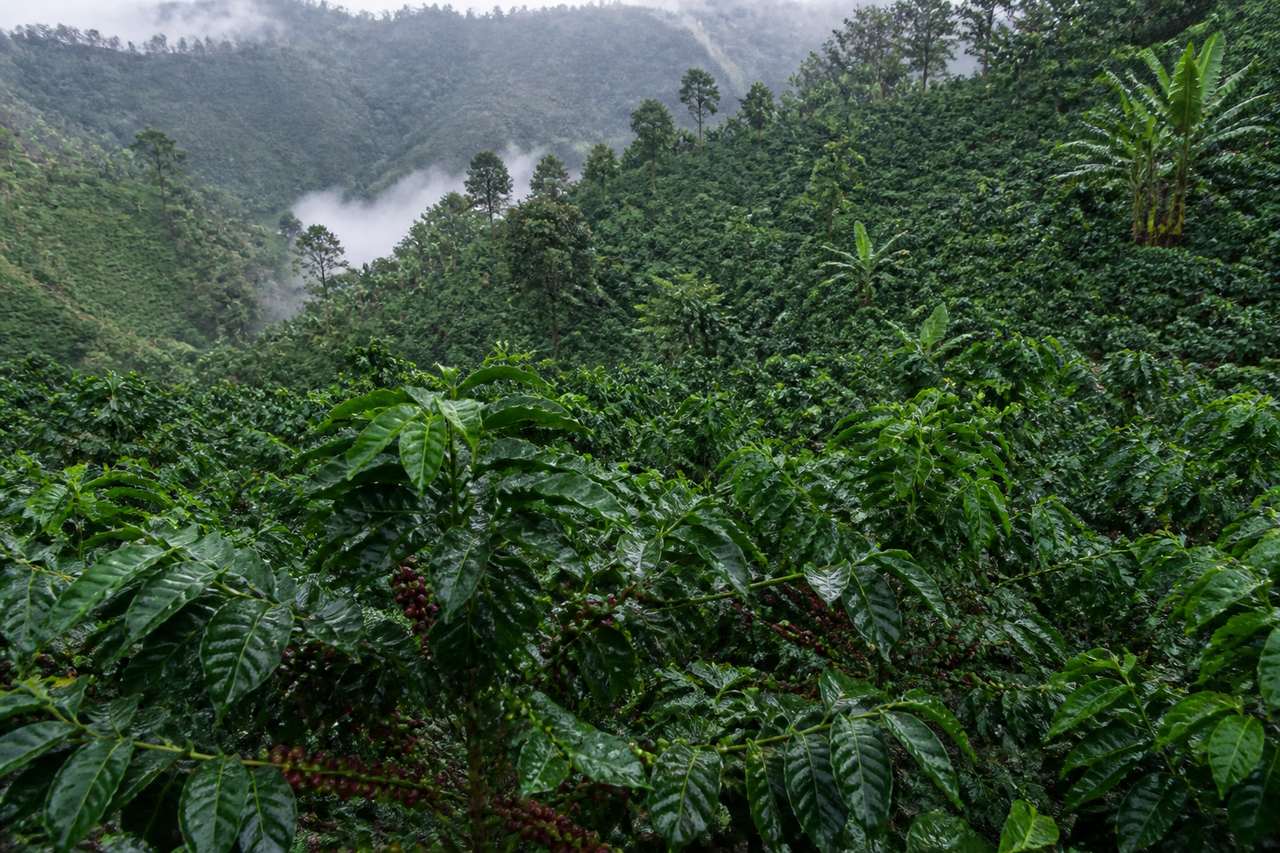
In November 2020, hurricanes Eta and Iota crossed Central America. The FEWS NET special report of March 2021 — the famine early-warning network — does not treat the region as a uniform block. Honduras, Nicaragua and Guatemala took the most direct impact on coffee production: extreme rain, landslides, cut roads, cherry that could not be picked in time. El Salvador, the same report writes, was not as affected by the hurricanes. The distinction matters. On a small isthmus, weather does not share the blow equally.
Honduras is, in the Central American concert, the volume neighbour. The same FEWS NET report ranks it as the region’s largest producer, with Guatemala second; El Salvador sits further down that list. More coffee land, more bags in the milds market, an industry long measured in containers. El Salvador is the boutique neighbour: less area, volcanic slope, selective picking and a cup sold with a farm name. FEWS NET does not publish a world ranking of 60-kilo bags here. It publishes a vulnerability map and a regional order. Anyone buying origin should read both: the country that suffered the cyclone most is not automatically the worse cup, and the one that suffered less is not safe from rust, December rain or a shortage of day labour.
Pacas: a Salvadoran mutation that crossed the border in 1974
Genetics tell another neighbourhood, older than Eta. World Coffee Research describes Pacas as a natural mutation of Bourbon, found in 1949 in Santa Ana, El Salvador. A dwarf plant, denser planting, a sweet profile. In 1974, the Honduran Coffee Institute (IHCAFE) introduced it to Honduras. The variety El Salvador turned into national infrastructure — and into one of the parents of Pacamara — travelled north and joined the Honduran tree stock alongside other introductions of the period.
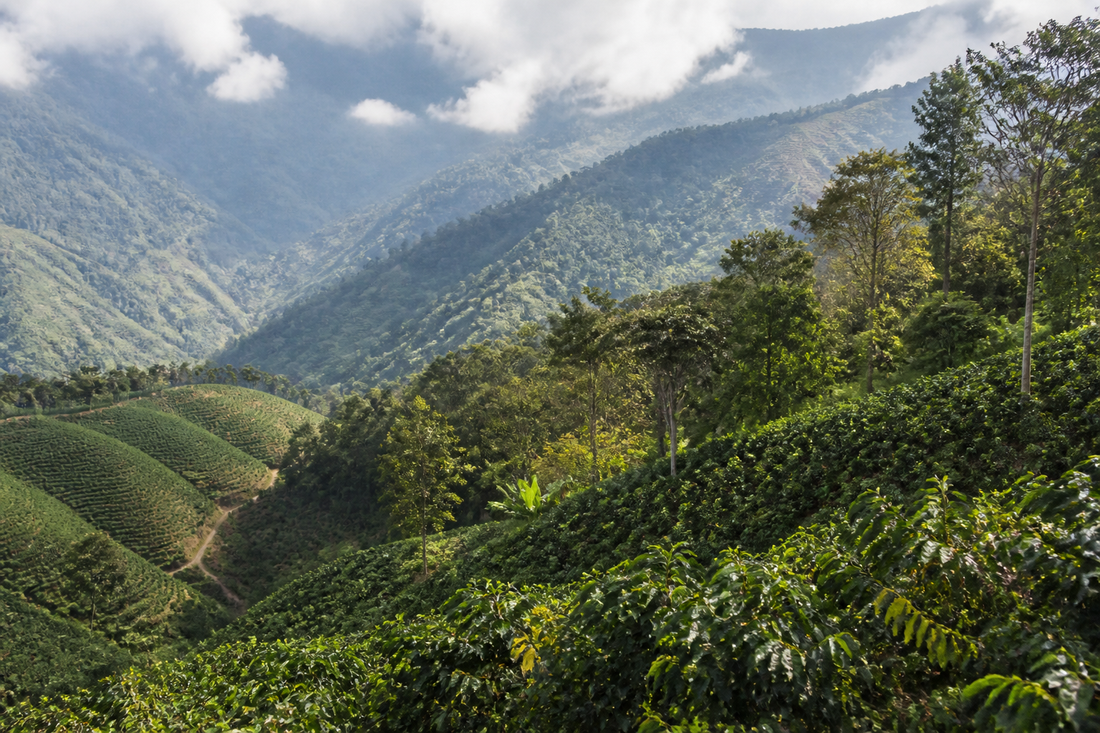
That does not homogenise the cups. A Pacas from Montecillos and a Pacas from Apaneca-Ilamatepec share a mutation, not a microclimate. Salvadoran lava soil, the altitude of Chalatenango or Metapán and microlot craft remain the boutique argument. Honduras can plant Pacas at scale; El Salvador can defend it as heritage and as a bridge to Pacamara. The roaster building a Central American menu does well not to melt the two origins into “a Northern Triangle arabica.”
Volume, hurricane and the cup that remains
The March 2021 report recalls that even where the hurricane struck less, coffee income shrank: pandemic, inputs, wages. In El Salvador the blow from Eta and Iota landed on a crop already under pressure. In Honduras, damage to farms and to the road network took part of the harvest at the most delicate moment. Two readings come out of that paper. First: Central American volume is fragile when the Atlantic sends rain inland. Second: the smaller origin has to sell quality, because it has no spare tonnage.
Café de El Salvador does not beat Honduras on bags. It wins, when management keeps up, on cup clarity and on the farm story. Pacas on both sides of the border proves that genetics travel; the volcano and the mill decide whether they travel as commodity or as specialty. Anyone who discovers this origin beside the Honduran neighbour will understand the map: a country of more volume, a country of more cup, and a 1949 mutation that joins them without confusing them.