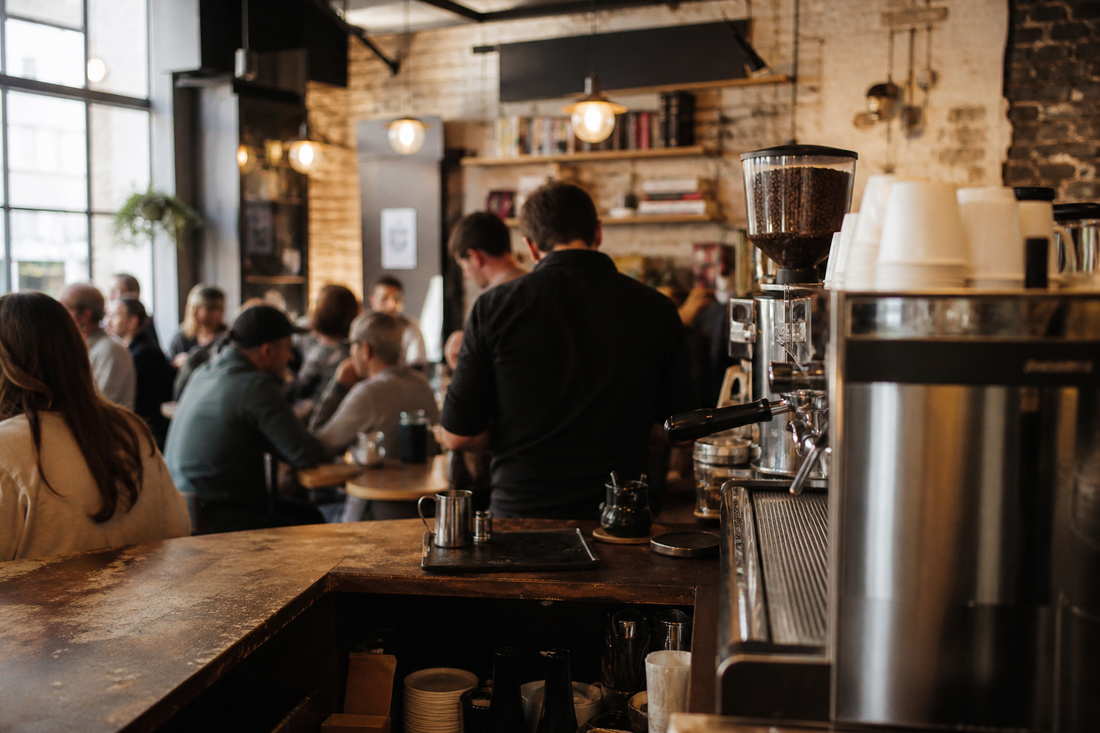


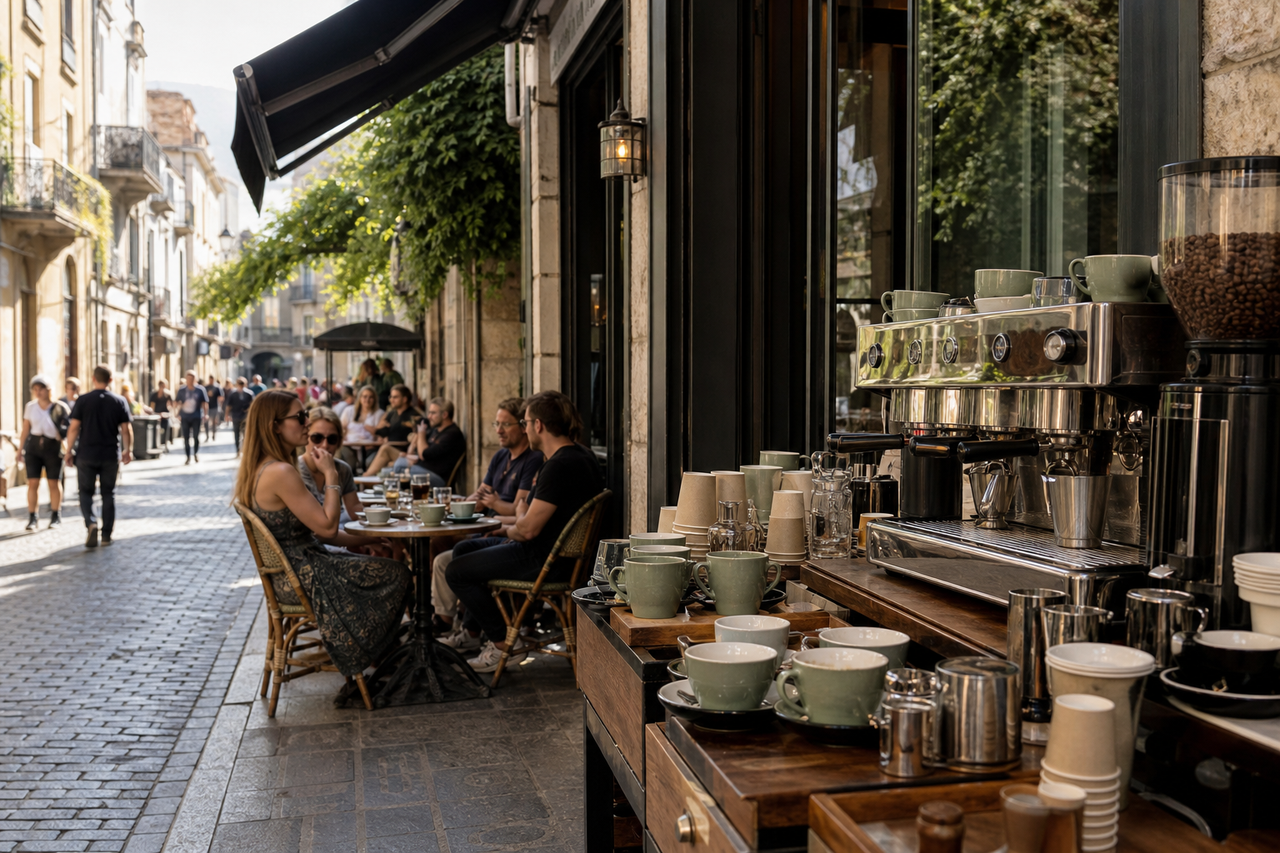
Europe is not just another coffee chapter: it is the thickest in value. Grand View Research places the European market at 32.5% of global coffee revenue in 2025, ahead of other regions, and names Germany as the leader within the continent. The engine the report highlights is not only the supermarket: it is consumption in Western European specialty coffee shops, venues that serve mainly high-quality coffees and that educate the customer on origin, variety and traceability.
In April 2024, the Netherlands’ Centre for the Promotion of Imports (CBI) — report dated 24 April, also cited by Grand View — reported that the European branded coffee-shop market grew strongly in 2022 and reached more than 40,000 outlets offering premium or specialty coffee. The figure describes 2022, not a bar-by-bar count in 2026. Even so, it fixes a scale: tens of thousands of points of sale where an anonymous bag loses and a lot with a story wins. That is the natural audience of a boutique origin.
Antwerp, Hamburg, Italy: the circuit that already knows El Salvador
Salvadoran green coffee does not reach those forty thousand bars by chance. It arrives through ports and through crafts. Antwerp concentrates containers and re-exports into the European Union; Hamburg remains a roasting hub and a market of buyers who demand paperwork; Italy keeps espresso as ritual and, in parallel, a layer of roasters looking for Pacamara, Bourbon and microlots for filter. The circuit is not a tourist brochure. It is the commercial geography of anyone who imports high-grown arabica and turns it into a daily cup or a third-wave menu.
For Café de El Salvador, that network is an advantage and an exam. Advantage: the European specialty consumer already pays for clean acidity, sweetness and a farm name. Exam: EUDR, moisture, certificates and a story that does not run out at “Central American.” Six volcanic regions — from Apaneca-Ilamatepec to Cacahuatique — fit on a barista’s board if the roaster has visited, cupped or at least read the denomination. National volume will not fill forty thousand cafés. A few hundred thousand well-aimed bags can occupy the shelf where the customer asks which volcano the espresso came from.
Bar culture, farm culture
Grand View notes that European coffee shops sit at the forefront of specialty innovation: diverse profiles, origin traceability, processes and certifications. That matches what El Salvador already produces when cherry is picked ripe and the mill is not improvised. Pacas and Bourbon support daily use; Pacamara and competition African varieties support the bar conversation. Europe, with a third of world coffee revenue, does not need El Salvador to be Brazil. It needs the small bag to be legible.
Anyone roasting in Milan, Cologne or Ghent has, in 2024 and after, a simple map: more than forty thousand venues already betting on premium, a continent that books 32.5% of coffee revenue, and a Central American origin that does not compete on tonnage. It competes on the cup. Discovering Café de El Salvador from that Europe is finding a supplier sized for specialty: contained volume, volcanic altitude and a story the Western bar is already trained to tell.