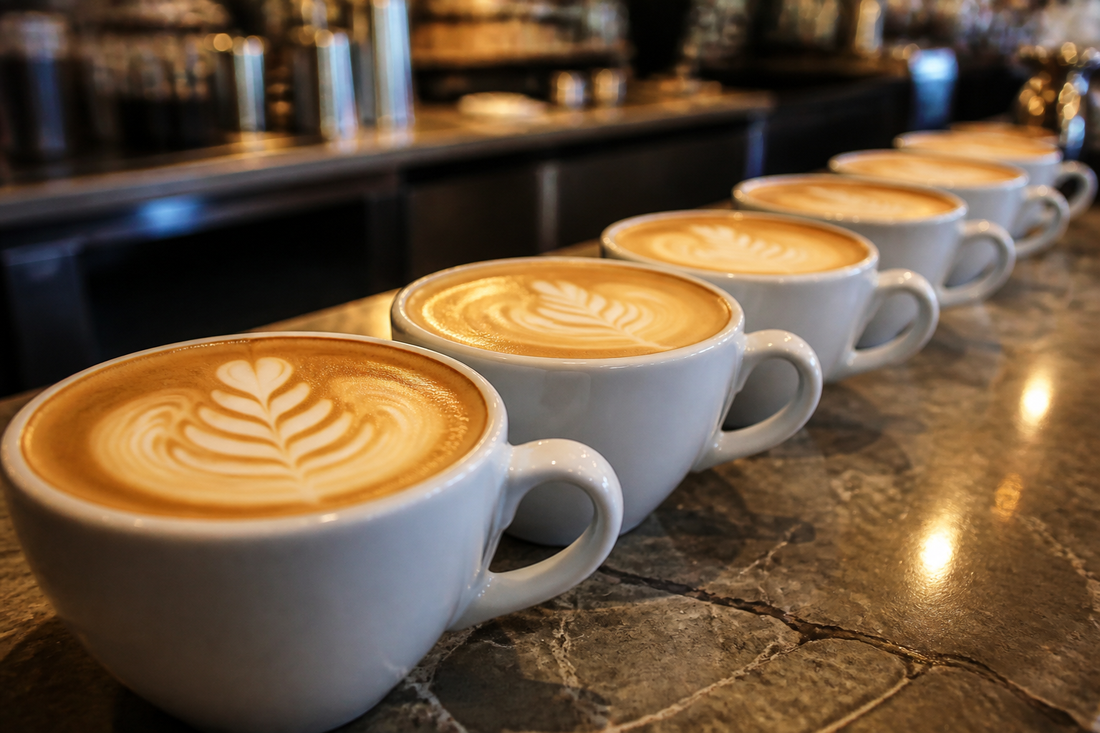


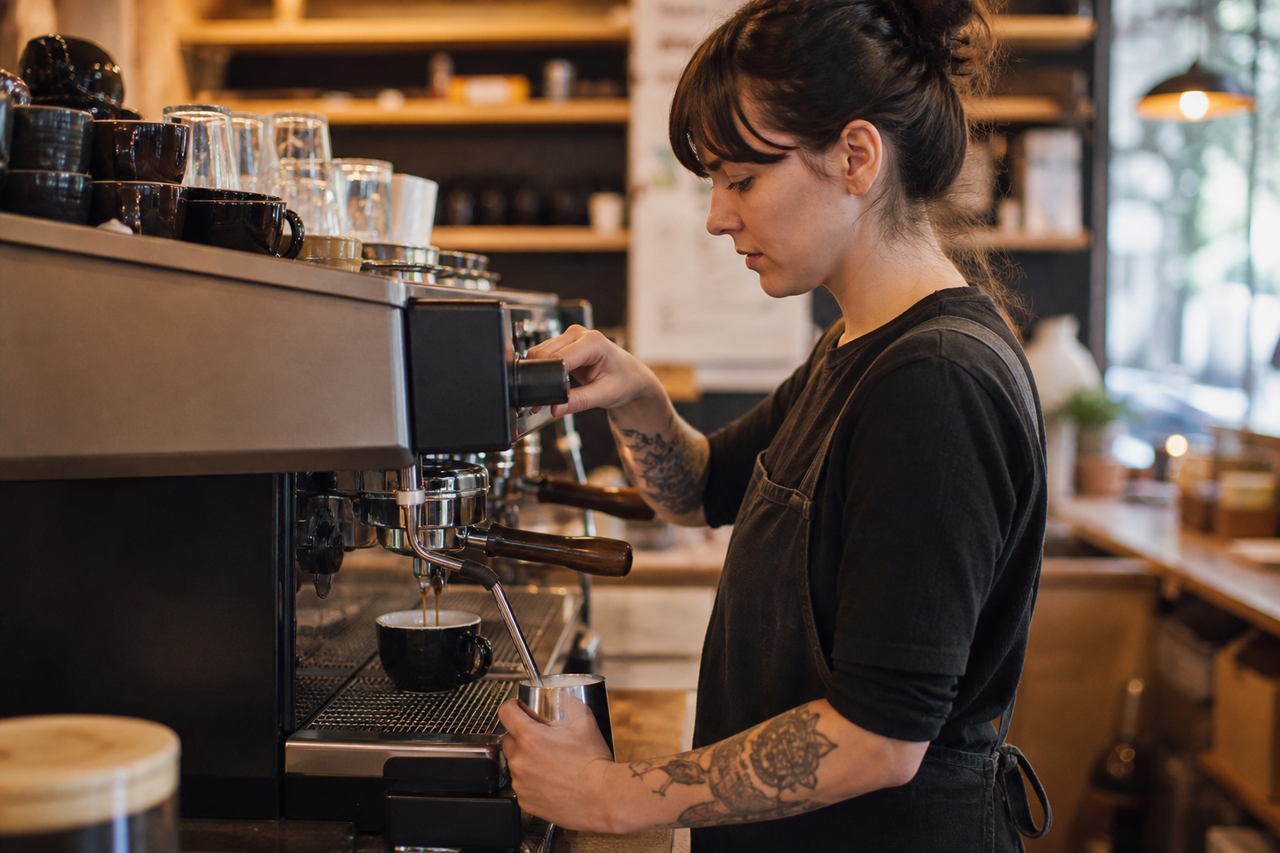
On the same 15 April 2025, the National Coffee Association’s Spring NCDT measured the other pillar of everyday specialty: espresso-based beverages. Cappuccino, espresso, latte, caffè mocha, macchiato, flat white and americano rose from 24% of adults the previous day in 2020 to 28% in 2025, a 17% increase. The June Specialty Coffee Report specified the weekly circuit: 43% of U.S. adults enjoyed an espresso-based drink in the past week.
That taste is not only “milk and crema.” It is short extraction, recipe, texture. The same April NCDT notes the kit: 12% of adults had an espresso machine at home, versus 8% in 2020. The bar was replicated in the kitchen. El Salvador is often narrated through filter and competition; it belongs here too. A high-grown arabica with sweetness and body holds milk without vanishing. A Pacamara or shade-grown Bourbon, roasted honestly for espresso, brings panela and cacao where an anonymous robusta only brings bitterness.
The bar as a bridge — without copying another story
In San Salvador, a café that serves only Salvadoran coffee placed third in The World’s 100 Best Coffee Shops 2026. That piece — Alquimia Coffee — lives on another card in this archive. What matters here is the bridge, not the ranking: it shows that the espresso-latte circuit is not the exclusive property of U.S. chains. A bar at origin can speak the same language of precision as the 28% of adults who yesterday ordered an espresso drink in the United States.
For the U.S. roaster, the lesson is practical. A specialty latte asks for beans with balanced acidity and caramels; straight espresso asks for cleanliness and persistence. The Salvadoran map — six denominations, named farms, washed, honey or natural processes — lets a menu rotate without leaving a single country. Pacas and Bourbon fill the everyday machine; Pacamara, Gesha and Bernardina explain the weekend shot. Anyone buying a container for the bar and a microlot for filter is not mixing markets: they are covering two readings of the same origin.
The NCA groups these drinks inside “specialty” alongside cold brew and traditional coffee perceived as premium. The producer should distinguish circuits: a 90-point competition is not a consumer survey, but both reward traceability and sweetness. The 17% five-year growth of everyday espresso is the trend that fills the machine; high-grown Pacamara is the matter that machine can explain. For every hundred cups, the April NCDT counted fifty-nine specialty and forty-one traditional: espresso is the visible engine of that majority.
Close
If cold brew stretches perfume, espresso concentrates it. Salvadoran coffee — volcano, shade, own varieties — has body for milk and clarity for the small cup. The 28% past-day penetration and the 43% in the week, measured by the NCA in 2025, describe a palate already formed. Anyone exporting into that circuit is not selling “a Central American espresso.” They are selling an origin that a bar in San Salvador already measured against the world, and that a bar in Seattle or Austin can serve with the farm on the board.