

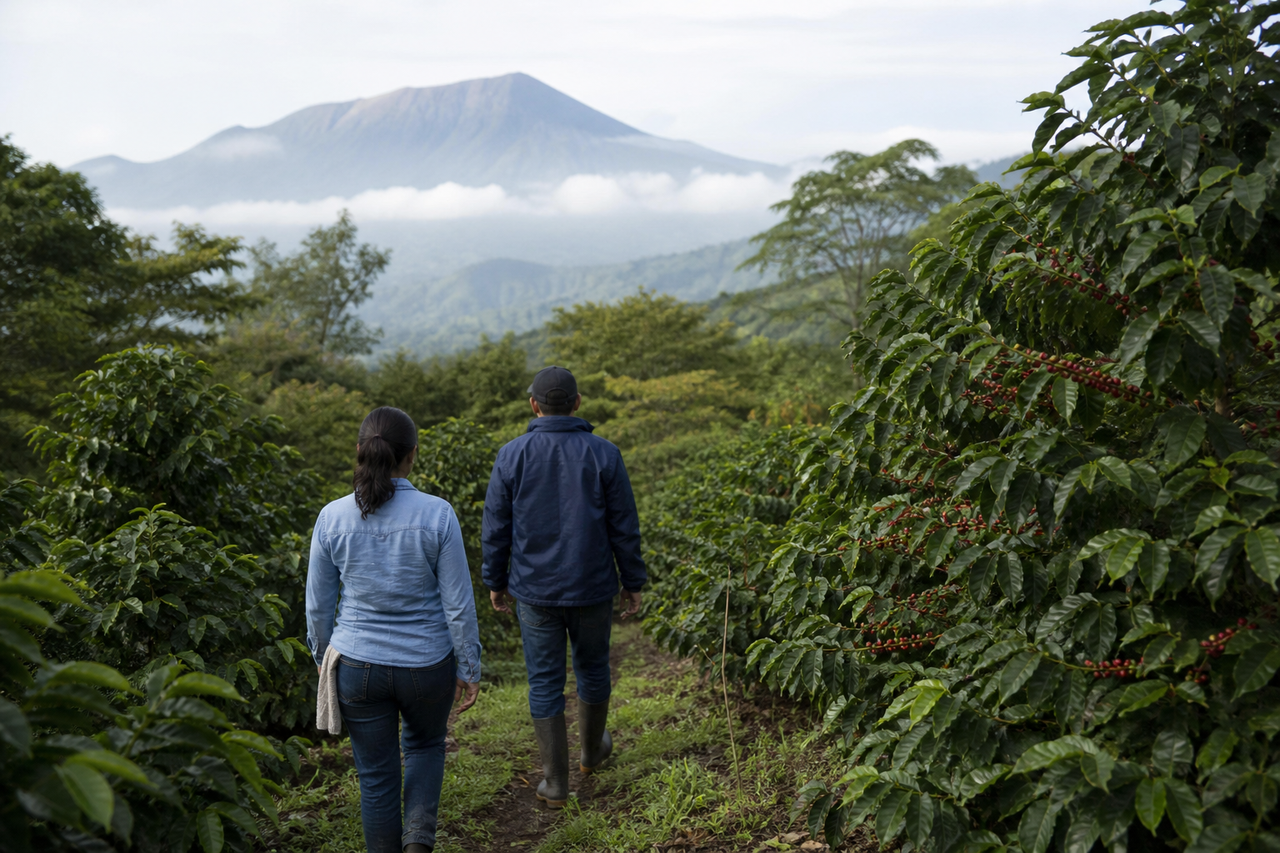
The classic green-coffee circuit is long: farm, mill, exporter, trader, importer, roaster. At each link the bean can become commodity: a nameless Central American arabica. Direct trade does not erase logistics or customs; it shortens the decision distance. The roaster chooses a farm, cups at origin, agrees price and profile, and the bag travels with a story. On 5 March 2024, that route had a Salvadoran photograph: buyers from Woodberry Coffee Roasters (Tokyo), accompanied by the Salvadoran Coffee Institute and the Foreign Ministry, walked farms in six departments. This piece does not retell that itinerary. It points to the model: whoever steps into the grove is no longer buying an anonymous C contract.
The USDA Coffee Annual ES2026-0004 describes the same circuit in structural figures. A small but expanding group of Salvadoran producers targets gourmet, specialty and fair-trade niches, and focuses on microlots of 5 to 100 bags and nanolots of fewer than 5. Buyers are in the United States, Europe and Asia. At contests and electronic auctions, those coffees often command premiums of 100 to 300 dollars per hundredweight over the C Contract. That is not the price of a commodity container. It is the price of a bag that can be counted, roasted apart and explained on the label.
The origin story is part of the lot
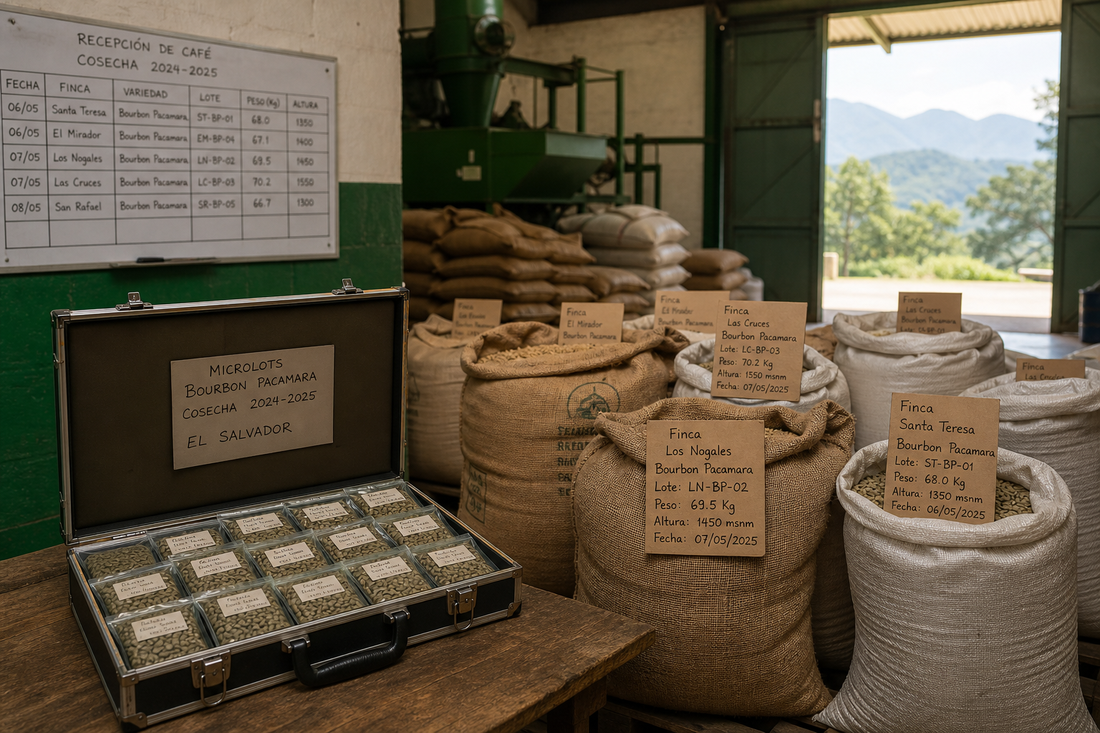
In direct trade the story is not marketing ornament: it is information the roaster needs to defend the price to their customer. Variety (Bourbon, Pacas, Pacamara, Gesha), plot, altitude, washed, honey or natural process, the name of who picks the cherry. Woodberry imported 7.5 tonnes between 2022 and 2023 and returned in 2024 to hold or raise that average; the volume fits a relationship range, not the New York board. A roaster who has cupped in the ISC lab and walked Chalatenango and Usulután can say *why* that Pacamara tastes of flower and not of generic Central America.
The sustainability of the model is economic before it is rhetorical. The USDA insists that specialty premiums are the incentive to export quality. If the circuit breaks and the lot returns to commodity, the premium evaporates and farm renovation is funded more poorly. Direct trade does not replace a competent exporter; it asks them to move a microlot with identity, not to dilute it in a country-origin blend.
For the producer, the lesson is size and table. Separating 20 bags from a shade plot costs more than mixing the harvest. It is paid if on the other side there is a roaster who already knows the farm or is willing to fly to San Salvador. For the European or Asian reader, the lesson is the label: if the bag names farm and variety, the direct circuit has already operated. Salvadoran highland coffee fits in that sample suitcase. Commodity does not.