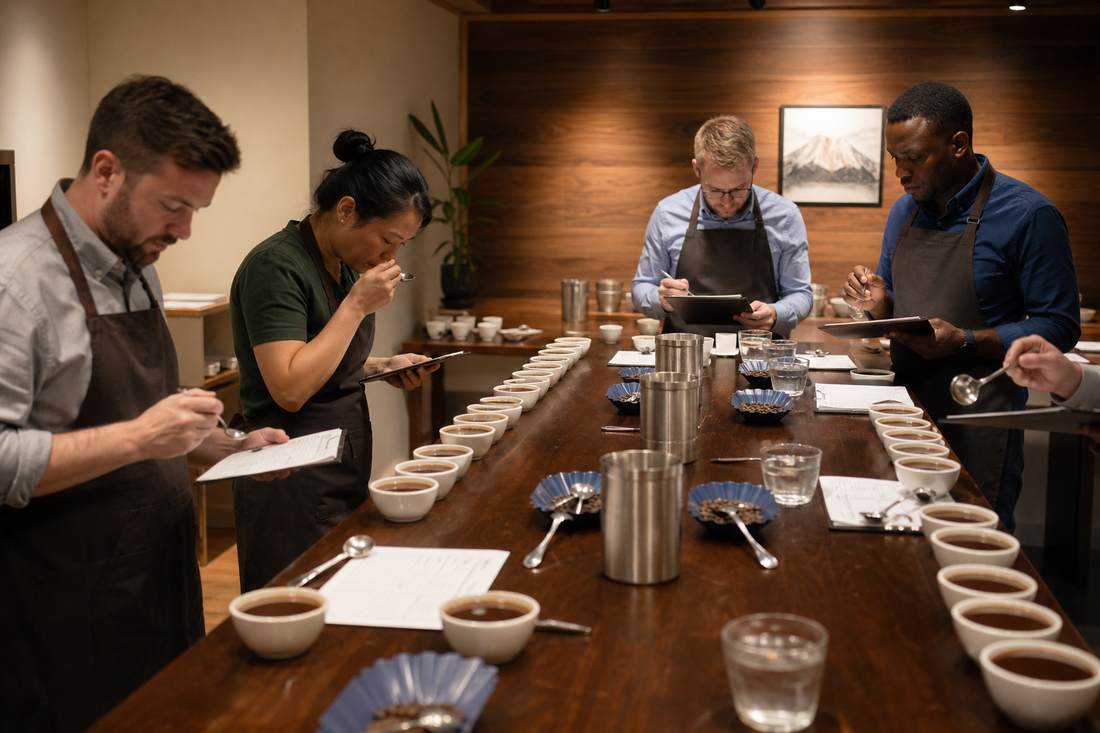


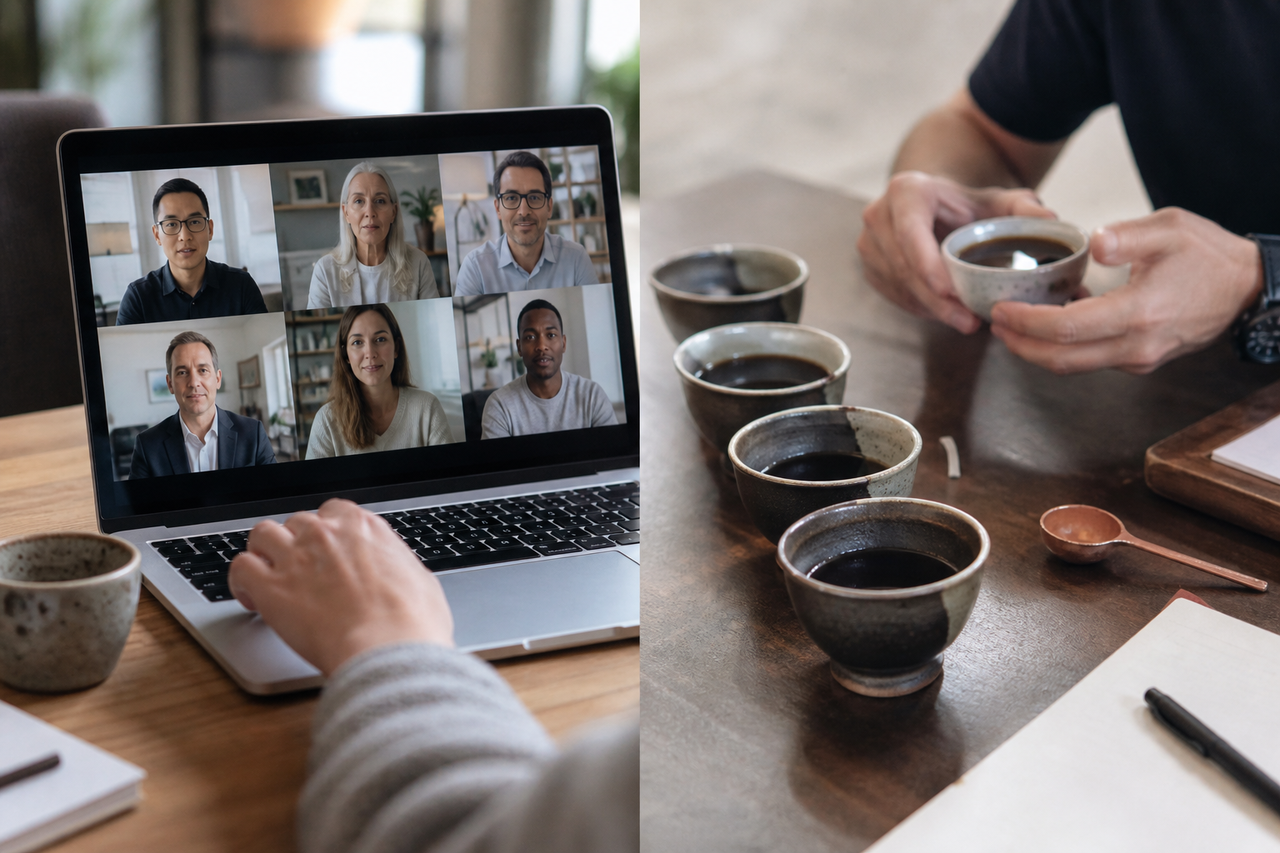
El Salvador’s 17th Cup of Excellence edition, in 2020, took place under unprecedented conditions. For the first time, the international jury did not gather in San Salvador to cup blindly for days in one room. The COVID-19 pandemic forced the Alliance for Coffee Excellence (ACE) to spread evaluation across global hubs: coffee samples shipped under strict protocol, accredited cuppers in different countries, results consolidated centrally. The competition continued; the plane did not.
For the Salvadoran origin, the adaptation had a double reading. On one hand, it showed international logistics could flex without relaxing quality standards. On the other, it confirmed that El Salvador’s coffee no longer depends on a buyer setting foot on the farm to be recognized: the cup travels, is evaluated under SCA rules and, if excellent, appears on the ranking even when the jury sits in Tokyo, Seattle or Copenhagen.
How blind cupping works — and why it matters
Cup of Excellence does not reward brands or trade relationships. It rewards the cup. Lots go through blind cupping rounds: evaluators do not know which farm the sample comes from. They only score aroma, flavor, acidity, body, balance and cup cleanliness under recognized protocols. To reach the international stage, a lot must clear thresholds in prior national selection.
In 2020, replicating that rigor in distributed form required coordination: same grind, same water, same vessels, synchronized time windows. ACE documented the process on its blog as a lesson for future emergencies. For Salvadoran producers, the message was clear: quality is portable. If the bean arrives well preserved and protocol is respected, jury geography should not change the verdict.
What results the virtual edition validated
The 2020 edition produced forceful results that reinforce the lesson. Finca Divina Providencia, with a natural anaerobic Pacamara at 90.31 points, led the ranking. 22 lots reached 87 points or above, a sign of depth in the origin. The later auction — also in adapted format — recorded historic prices, including a lot sold above US$80 per pound. None of that would be credible if virtual cupping had diluted standards.
For the roaster discovering El Salvador, this episode invites trust in verified competitions. CoE points are not one cupper’s opinion on a lightning trip; they are the average of repeated evaluations under rules. In 2020, those rules survived distance.
Forced innovation and legacy for the sector
The pandemic accelerated changes the specialty sector already debated: courier samples, remote cuppings for buyers, online auctions with participants on several continents. El Salvador, small in production but ambitious in the cup, benefited because its value proposition was always quality over volume. It does not need to fill containers; it needs to convince in the cup.
The 2020 lesson remains: Salvadoran coffee reaches the world even when the jury does not travel. That requires, however, impeccable logistics from farm to cupping lab, and craft at origin that does not weaken because the buyer is absent. When both conditions are met — as in the 17th edition — the volcanic mountain speaks with the same clarity in San Salvador or in an ACE hub thousands of kilometers away.
Anyone importing or roasting lots from El Salvador today inherits that precedent. Trust in the origin can rest not only on visits and photos, but on competitions that proved resilience under pressure. Virtual cupping did not replace human relationship between producer and buyer, but it did prove excellence is not fragile when protocol is serious.