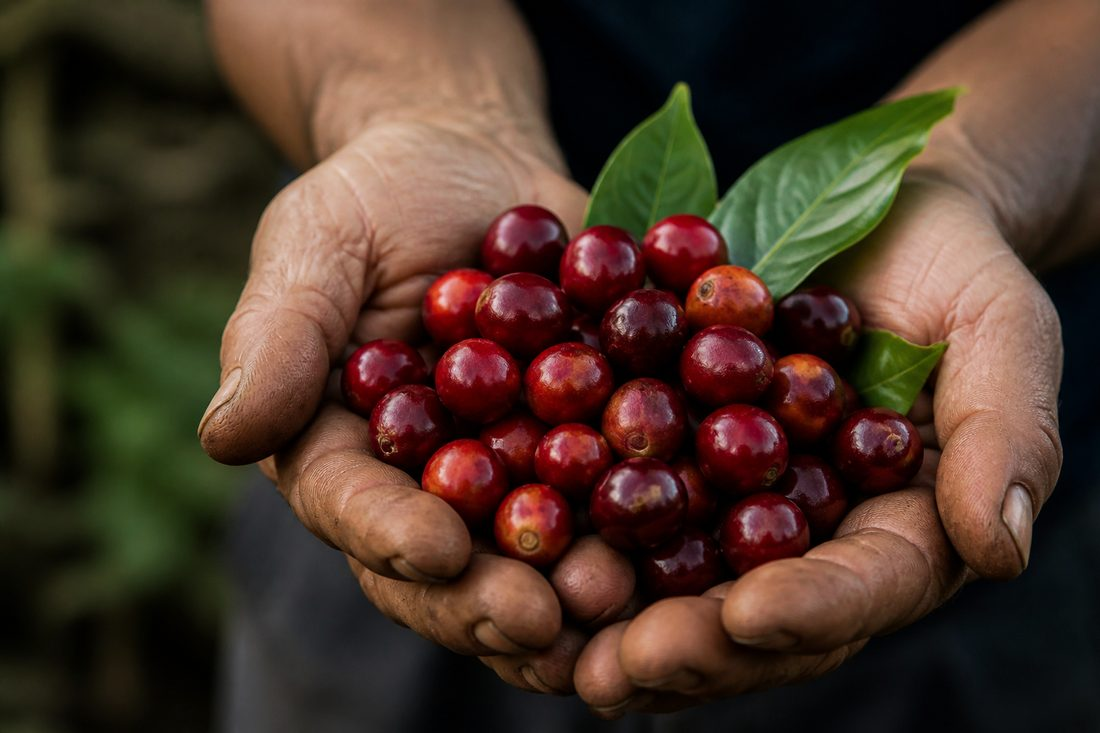


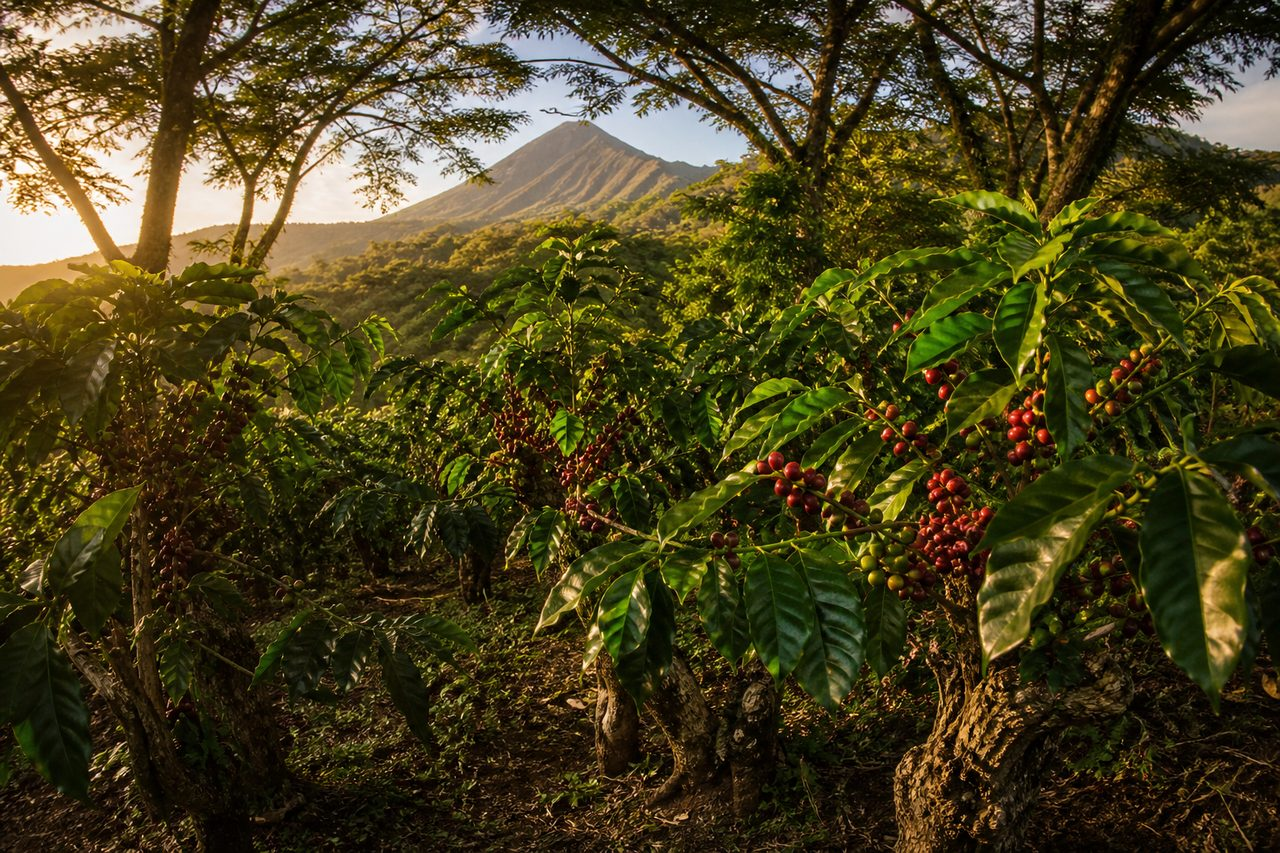
Before Gesha, SL28 and Sudan Rume, El Salvador already had a cup language. That language is called Bourbon. Perfect Daily Grind, in its March 2026 feature on African varieties, says so without ambiguity: Bourbon is the historical and genetic foundation of Salvadoran coffee growing; its preservation has defined the country’s reputation for balanced, sweet profiles. It is believed that around 60% of national production is still Bourbon. The African rarities are better understood if one starts from that base.
World Coffee Research places Bourbon’s origin in Yemen and its passage, in the early eighteenth century, through Bourbon Island — now Réunion — with French missionaries. By the mid-nineteenth century the variety had reached El Salvador, where it adapted to volcanic soils and a temperate highland climate. Here it did not stand still: natural selection and intentional breeding yielded distinctly Salvadoran coffees. Bourbon is a tall plant, of relatively low yield and high quality potential: exactly the genetics a boutique origin can defend.
Pacas and Pacamara: what El Salvador invented from Bourbon
From that plant came a mutation the country can claim as its own. Pacas is a natural mutation of Bourbon found in Santa Ana in the mid-twentieth century (the account Perfect Daily Grind records places the find around 1949, on farms of the Pacas family). The plant is shorter: it allows denser planting and easier harvesting. Genetic studies by the then Salvadoran Institute for Coffee Research confirmed that Pacas is a single-gene mutation of Bourbon. María Pacas recalls in the feature that her great-grandfather discovered the variety, and that Bourbon and Pacas remain among the most important they grow.
Pacamara is the next chapter: the cross of Pacas × Maragogipe, the large bean that so often dominates Cup of Excellence. If Bourbon is the foundation, Pacamara is the signature. The buyer who asks for “a Salvadoran coffee” is often asking, without knowing it, for that genealogy: panela sweetness, chocolate and caramel in Bourbon; flower, fruit and body in Pacamara. It is not nostalgia. It is a profile that daily espresso and filter hold better than many rarities.
Two pantries, one volcano
Why, then, does the roaster still look for Salvadoran Bourbon when the market rewards Gesha? Because highland Bourbon, with shade and ripe cherry, delivers balance: clear acidity without aggression, sweetness that needs no syrup, a clean finish. It is the coffee that fills the Monday-to-Friday menu. Gesha, Sudan Rume and SL28 are, in Diego Baraona’s metaphor (Los Pirineos), the dessert: they lift the brand, but they do not feed the 84- and 85-point volume that makes the farm viable.
The contrast is the offer. El Salvador does not force a choice. It offers the classic pantry — Bourbon, Pacas, Pacamara, Bernardina — and the African pantry in micro and nano lots. Anyone who builds three cups — a washed Bourbon from Apaneca, a Pacamara honey from Metapán, a contest Gesha — tells the whole country without leaving one origin. That is the didactic advantage of 2026: the foundation has not moved; the menu has.