

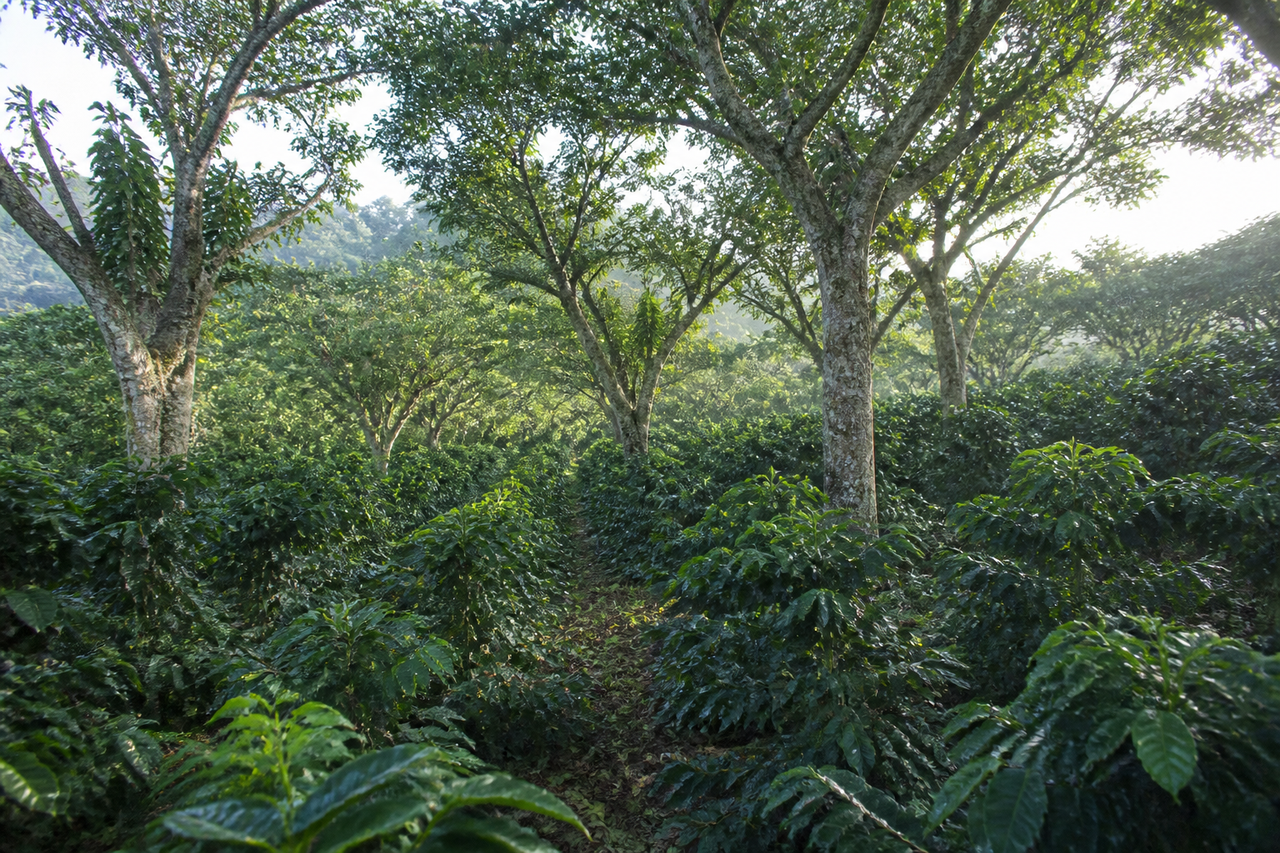
In 2008, Ruperto Bernardino Merche, a coffee grower at Los Bellotos in the Apaneca-Ilamatepec zone, noticed five trees that did not look like the rest of his farm. The leaves were more elongated, the shape different. Instead of uprooting them, he marked and observed them. Over time, those five specimens multiplied in the nursery to 46 identified plants. What seemed a local oddity became an internationally relevant genetic find.
The laboratory of Alfredo and María Pacas — a reference in coffee genetics in El Salvador — sent material to Italy for sequencing. The result: the new variety combines roughly 70% Gesha and 30% Agaro, a distinct Ethiopian line. It was named Bernardina after its discoverer. It is not a recent laboratory cross: it is a natural selection that survived on the mountain and that science confirmed as unique.
Why it matters beyond the name
El Salvador lost much of its coffee area since the 1990s, partly because of leaf rust — the fungus Hemileia vastatrix that attacks leaves and weakens the plant. Bourbon, the country’s historic genetic base, is productive and sweet in the cup but vulnerable. Bernardina showed in trials greater rust resistance than Bourbon, without giving up cup quality. For a small origin that competes on specialty, not volume, that combination — resilience and sensory profile — is invaluable.
At the 2019 Cup of Excellence, a lot from Finca La Esperanza — honey-processed Bernardina — took third place with 89.93 points. The score showed the variety is not only agronomic promise: it enters international competition with demanding processes and demanding juries.
What those who cup it can expect
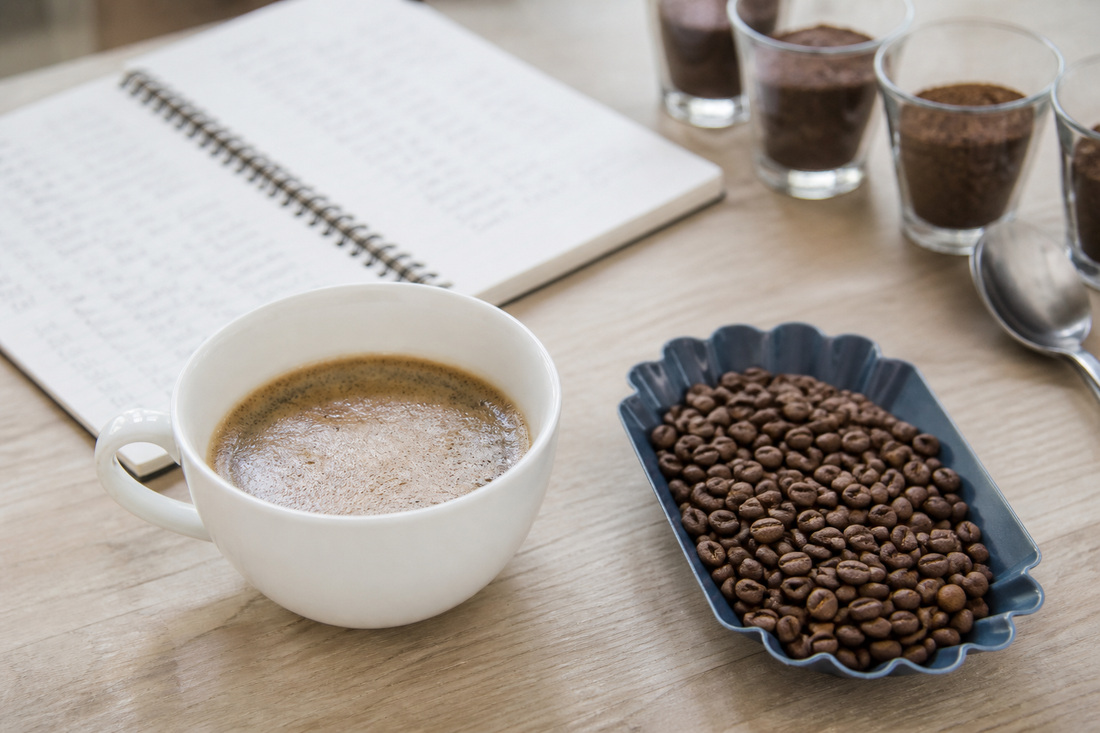
Profiles described by roasters who have worked Bernardina point to flower — jasmine, orange blossom — tropical fruit and bright acidity partly inherited from Gesha, with a rounder body thanks to the Agaro component. As honey, sweetness intensifies; washed, the cup gains cleanliness and definition. Like any high-altitude variety, it demands selective picking and careful drying.
For the curious buyer, Bernardina represents the lesser-known face of the Salvadoran origin. Pacamara is the flagship variety; Bourbon and Pacas are the historic substrate. Bernardina adds a third path: exotic genetics adapted to the volcano, found by an attentive producer, validated by science and already present at excellence auctions.
A discovery that tells an origin story
Ruperto Bernardino Merche’s story fits Salvadoran coffee tradition: field observation, patience in the nursery, collaboration with the Pacas — a family that has spent generations improving varieties in the country. Los Bellotos is not a famous name at international fairs, but thanks to five trees marked in 2008 the country’s genetic map expanded.
Anyone exploring El Salvador will find in Bernardina a lesson on traceability and biodiversity. It is not about importing Gesha at any altitude, but recognizing what already grows on the mountain, multiplying it with judgment and bringing it to the cup. That is what a small origin does best when it combines science, field and specialty market.