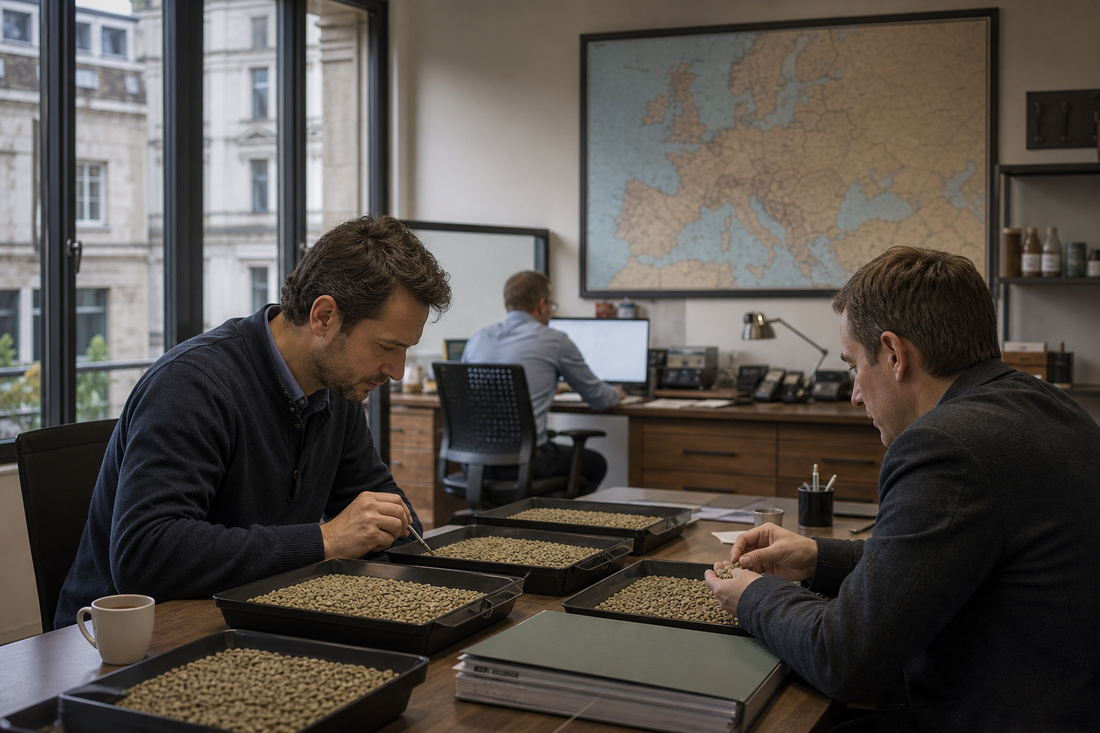


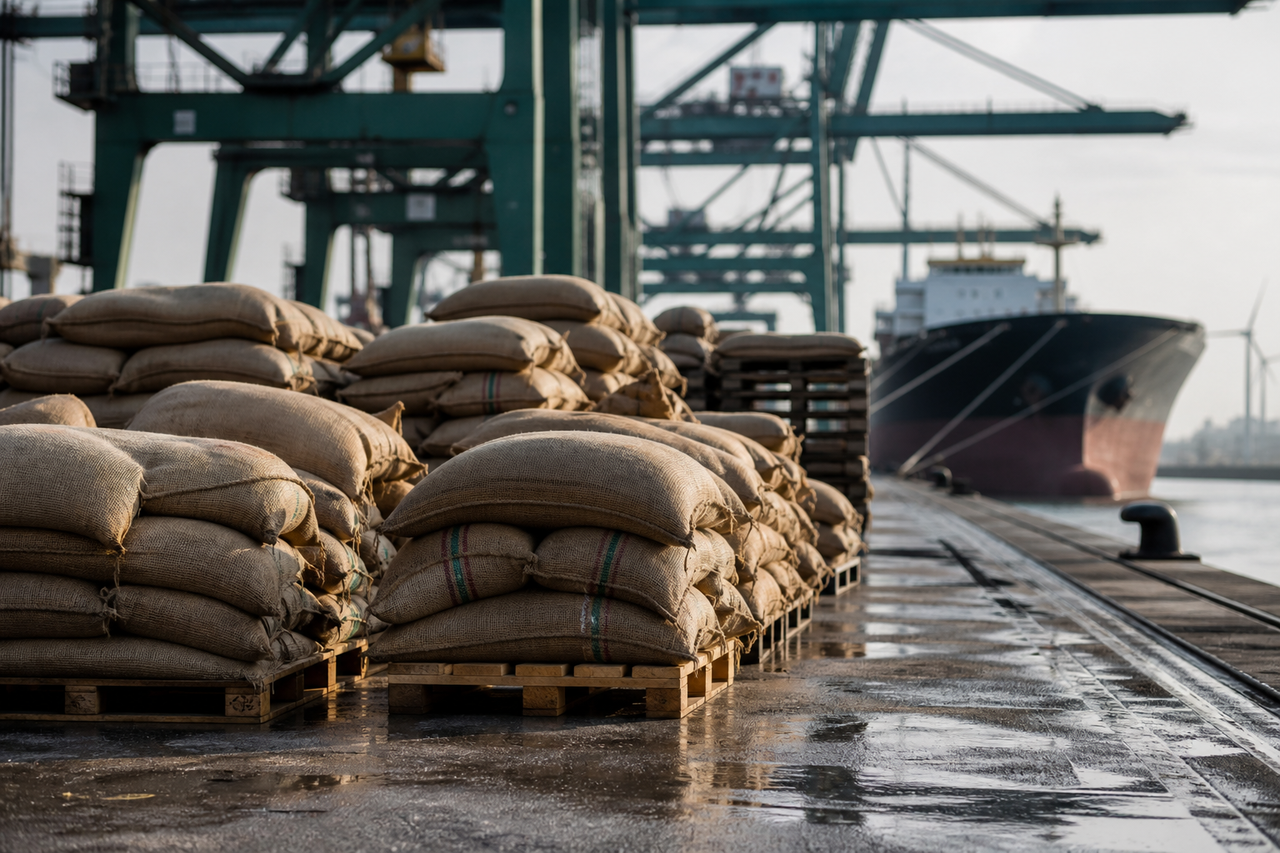
Between January and September 2025, El Salvador exported coffee to Belgium worth $20.2 million, according to Central Reserve Bank data cited in Salvadoran press in June 2026. The figure is not marginal: Belgium consolidated as the second destination for national beans, with around 11% of bags, second only to the United States. The USDA Coffee Annual 2026 (ES2026-0004) confirms the trend: Antwerp does not buy only for the Belgian cup; it redistributes across the European Union.
Geography explains it. Antwerp is the region’s largest container port; Brussels concentrates roasters, importers and the machinery of international fairs. A bag that lands in Flanders can end up in a bar in Milan, Hamburg or Paris without losing the traceability the European market demands. For the Salvadoran coffee farmer, selling to Belgium is not selling to a country of eleven million people: it is entering through the continent’s back door.
World of Coffee and the Ilamatepec project
In June 2026, World of Coffee Brussels gathered the global industry at Brussels Expo. El Salvador arrived with institutional backing: the European Union, through Global Gateway, the International Trade Centre (ITC), the Salvadoran Coffee Institute (ISC), Foreign Affairs and the Ministry of Economy. The Ilamatepec project, financed with about $7 million from the EU, coordinated promotion of designations of origin and preparation for rules such as the EUDR (EU deforestation regulation).
The six volcanic regions —Apaneca-Ilamatepec, Alotepec-Metapán, El Bálsamo-Quezaltepec, Chinchontepec, Tecapa-Chinameca and Cacahuatique— found in Brussels a showcase where the European buyer can cup, negotiate and close contracts in three days. It is not fairground tourism: it is concentrated trade.
What buyers in Europe should understand
Belgium rewards coffees with clean sweetness, balanced acidity and complete documentation. The Salvadoran profile — Bourbon, Pacas, Pacamara at altitudes of 800 to 1,800 metres — fits the specialty menu the Flemish and Dutch consumer already knows. But the hub also demands logistical consistency: packaging, moisture, phytosanitary certificates and, increasingly, proof of origin without deforestation.
If you are a roaster in the EU, buying via Belgium can simplify the chain. If you are a producer, knowing that 11% passes through Antwerp reminds you that cup quality and paper quality go together. El Salvador does not compete on volume with Brazil or Vietnam; it competes on name. And Belgium, in 2025 and 2026, showed that name has a clear European address.