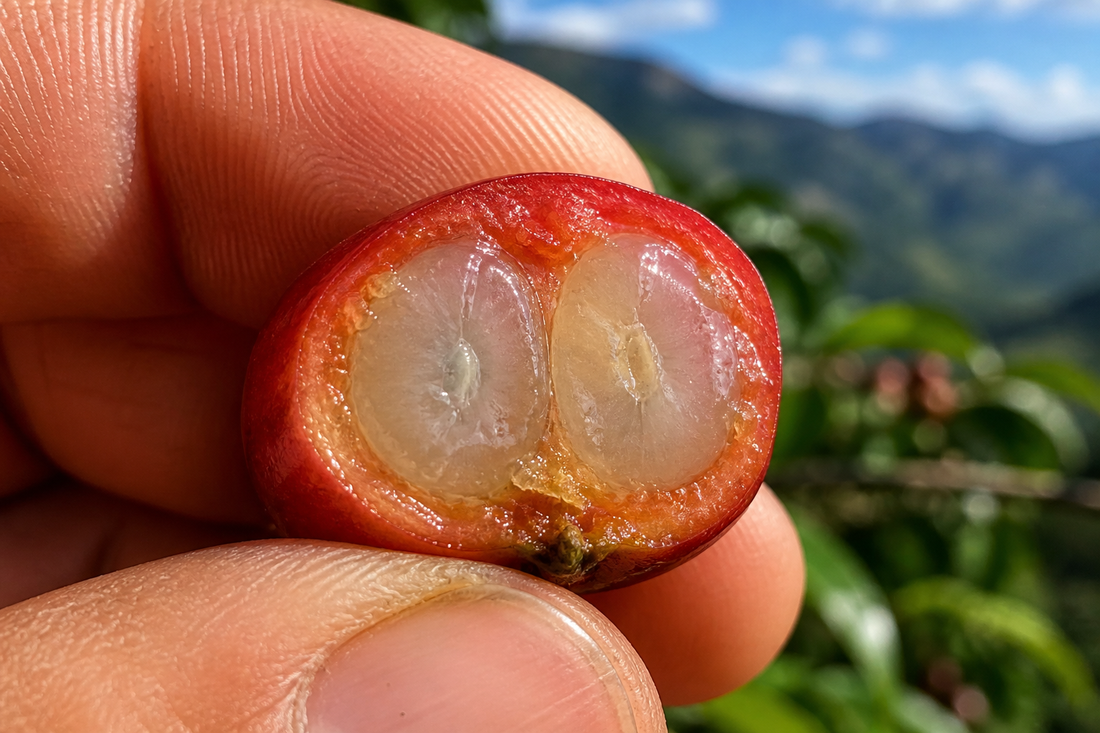


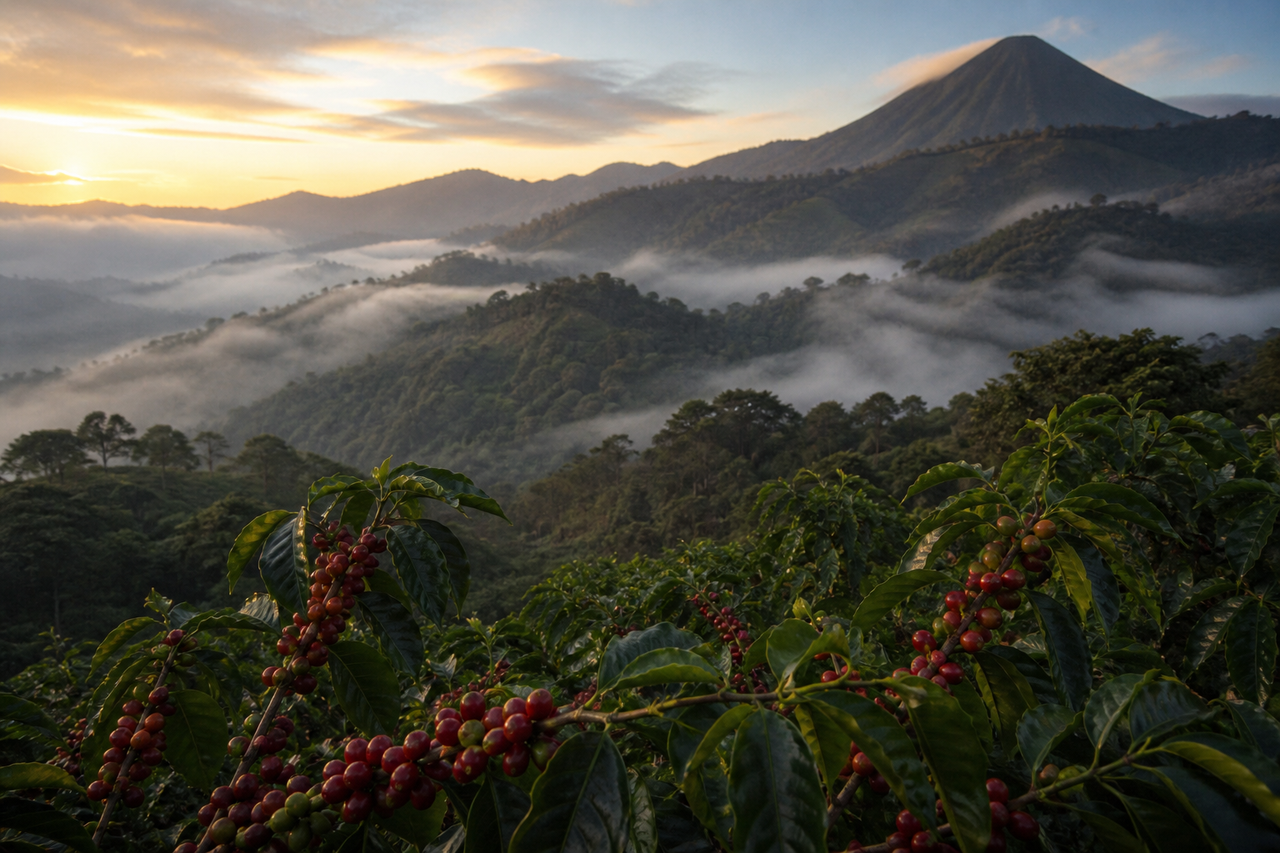
There is a farm lesson that is clearer in the cup than on a map. In El Salvador, the specialty coffee the market rewards usually grows in a band of about 1,200 to 1,900 metres. Higher up, nights cool the air; the day does not cook the cherry; the fruit takes extra weeks to turn red. That slow ripening is not poetry: it is time for the seed to gather sugars and acids that, in the cup, read as sweetness and bright acidity, with a body that needs no disguise. Anyone who has compared a high-slope lot with one from the foot of the hill notices the difference without a blind cupping: more clarity, less flattening.
The country concentrates that logic in six volcanic ranges, the same landscape the Salvadoran Coffee Institute recognises as coffee origin. There is no need to recite regulations or municipalities to understand the mechanism. What matters to the palate is relative height, breeze and lava soil: a microclimate that slows the plant’s clock. Less night heat, slower bean growth. Slower growth, more of what hot water later extracts.
What changes inside the cherry
Think of the cherry as a fruit, not as a sack. A mango in hard sun softens early and tastes flat; one that ripens with cool nights keeps acidity and aroma. Coffee does something similar. Sugars in the pulp and mucilage feed clean fermentations if harvest waits for the right point. The seed, meanwhile, develops the structure a roaster will call “sweet” or “citrus.” A Bourbon from that band often shows panela and orange without aggression. A Pacamara, flower and fruit with more body. A Gesha, an almost transparent acidity, easy to break if it is picked green or roasted too far.
The craft is not to rush the pick. Salvadoran specialty lives or dies on that patience: underripe beans pull the cup down; ripe beans lift it. Shade in the grove helps the sun not to speed the clock. The mill — washed, honey or natural — does not invent sweetness; it keeps it or soils it. That is why altitude is not a brochure number: it is the prior condition for the process to have worthy raw material.
How to drink altitude without jargon
A home test teaches more than a chart. Brew the same method with an arabica from that band and with a generic lower-grown coffee. Ask whether the first finishes clean, whether sweetness lasts after the sip, whether acidity recalls fruit and not vinegar. That is the signature of Salvadoran mountains. The Institute publishes denominations to bind name and geography; this piece stays in the cup: why the specialty buyer asks for metres.
Discovering Café de El Salvador, in this sense, is learning to ask for altitude with the palate. Pacamara, Bourbon and Gesha do not shine by varietal magic alone. They shine because the range gives them time. Time is drunk: sweetness, clean acidity, body. The rest — label, contest, map — comes after.